

Jump to a section
Anatomy illustrationCompare proceduresRelated ProceduresWhat Roux-en-Y gastric bypass doesWhy a clinician might recommend bypassWeight-loss evidence: what the numbers meanDiabetes and other health outcomesRisks that belong in the decisionUlcers, nicotine and anti-inflammatory medicinesDumping syndrome and low blood sugarSupplements and lifelong monitoringPreparing medications, meals and home supportRecovery is a process, not a fixed travel packageWhat happens if weight returns?Gastric bypass cost in MexicoTravel and continuity of careYour consultation checklistFrequently asked questionsYour next stepReferencesRoux-en-Y gastric bypass is a major treatment for obesity that changes both the stomach and the path food takes through the small intestine. It can produce substantial, lasting weight loss and improve metabolic health. It also creates responsibilities that extend well beyond the hospital stay, including supplements, medical monitoring and attention to symptoms that may need urgent assessment. [1]
If you are considering gastric bypass in Mexico, your decision should connect three things: why this particular operation fits your health, whether the treating team and facility can support your needs, and how care will continue at home. This guide helps you evaluate those questions before turning a published price into a booking.
Understand the anatomy
A simplified, labeled view of the structures and treatment area. Select the image to view it at full size.
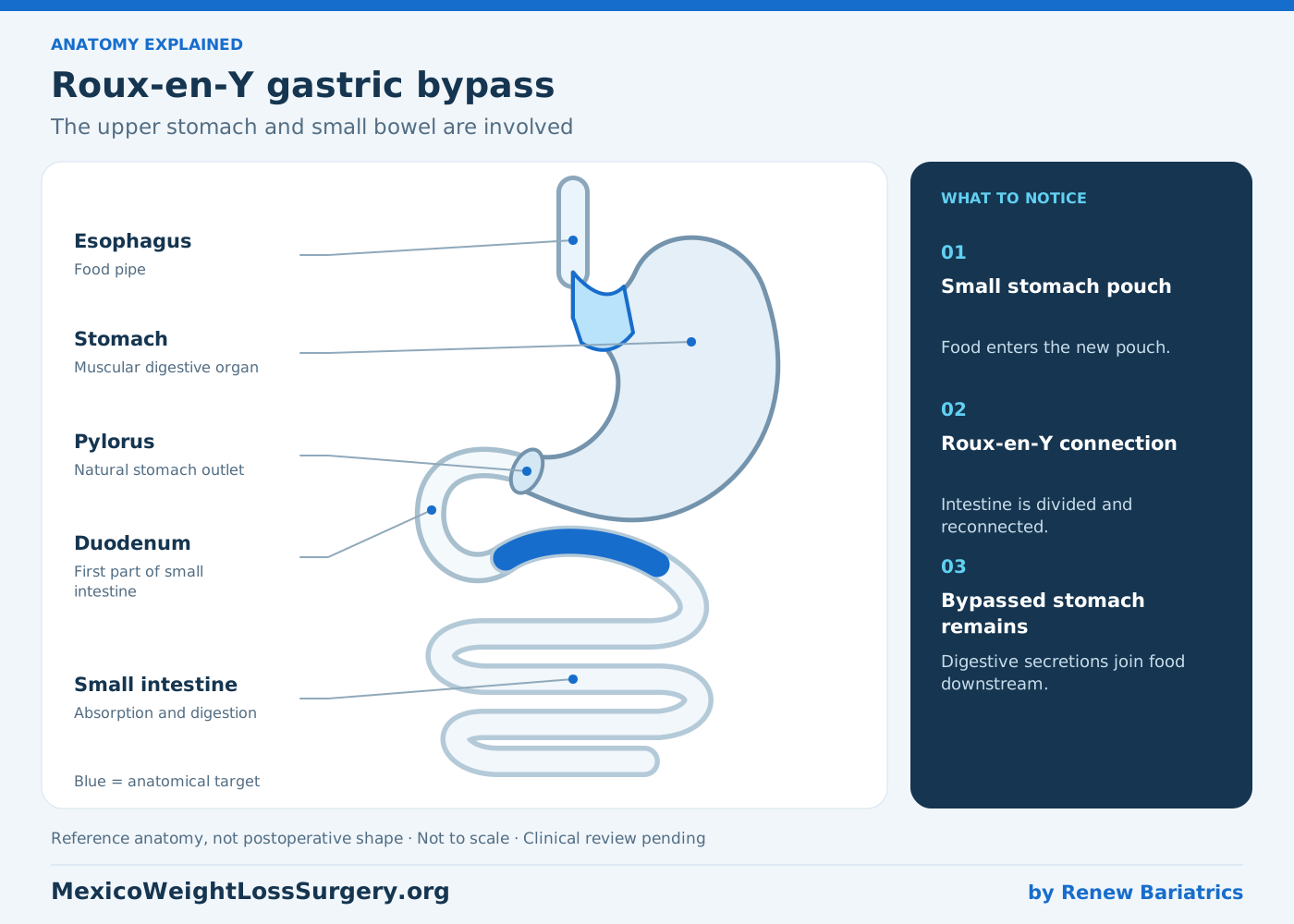
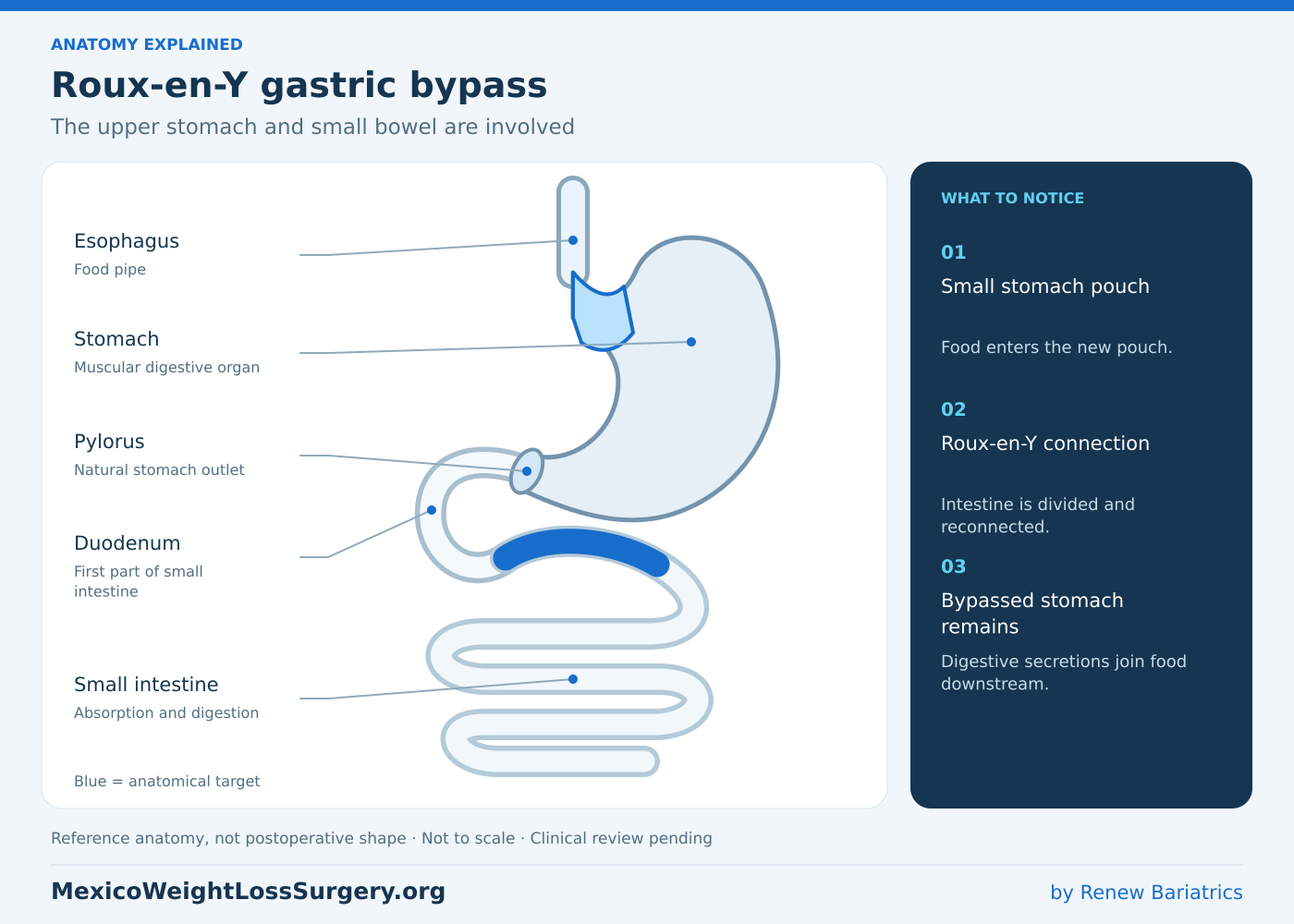
Anatomy references: Mayo Clinic: Gastric bypass ↗ · Mayo Clinic: Sleeve gastrectomy ↗
What Roux-en-Y gastric bypass does
The surgeon creates a small stomach pouch and connects it to a portion of the small intestine. Food travels through the pouch into this new intestinal route. The bypassed stomach and upper intestine remain involved in producing and carrying digestive secretions, which meet food farther downstream. This is different from removing most of the stomach during sleeve surgery. [2]
The operation affects appetite, food intake and nutrient absorption. It is generally performed using a minimally invasive approach under general anesthesia, although the method depends on individual circumstances. Bypass is difficult to reverse and should not be selected on the assumption that it can easily be undone. [21]
Ask for the full procedure name in your written plan. Roux-en-Y, one-anastomosis or “mini” bypass, SADI-S, and a revision of an existing bypass are not interchangeable. The number and location of intestinal connections, the anatomy bypassed, and the reasons for choosing each operation differ. A price headed simply “bypass” leaves too much unclear.
Why a clinician might recommend bypass
Bypass may be considered when the expected weight and metabolic benefits suit a person’s needs and the risks are acceptable. Significant reflux can be an important factor in choosing between bypass and sleeve; bypass often improves reflux, whereas sleeve may cause or worsen it. This does not mean every person with heartburn needs bypass. [1]
The 2022 ASMBS/IFSO guidance supports surgery for BMI 35 or above, and for type 2 diabetes with BMI 30 or above. It also supports considering surgery in selected people with BMI 30–34.9 when nonsurgical care has not produced durable benefit. Clinical eligibility and insurance approval are separate questions. [3]
A useful consultation explores your current health and the practical demands of treatment. Tell the team about previous operations, smoking or nicotine use, medications, reflux, swallowing problems, nutritional deficiencies and the availability of local follow-up. Bring records rather than relying on memory where possible.
Ask the surgeon to explain the tradeoff in your case: what makes bypass preferable, what might make another treatment safer or more suitable, and which uncertainties remain. You should be able to repeat the reasoning in your own words before agreeing to the operation.
Weight-loss evidence: what the numbers mean
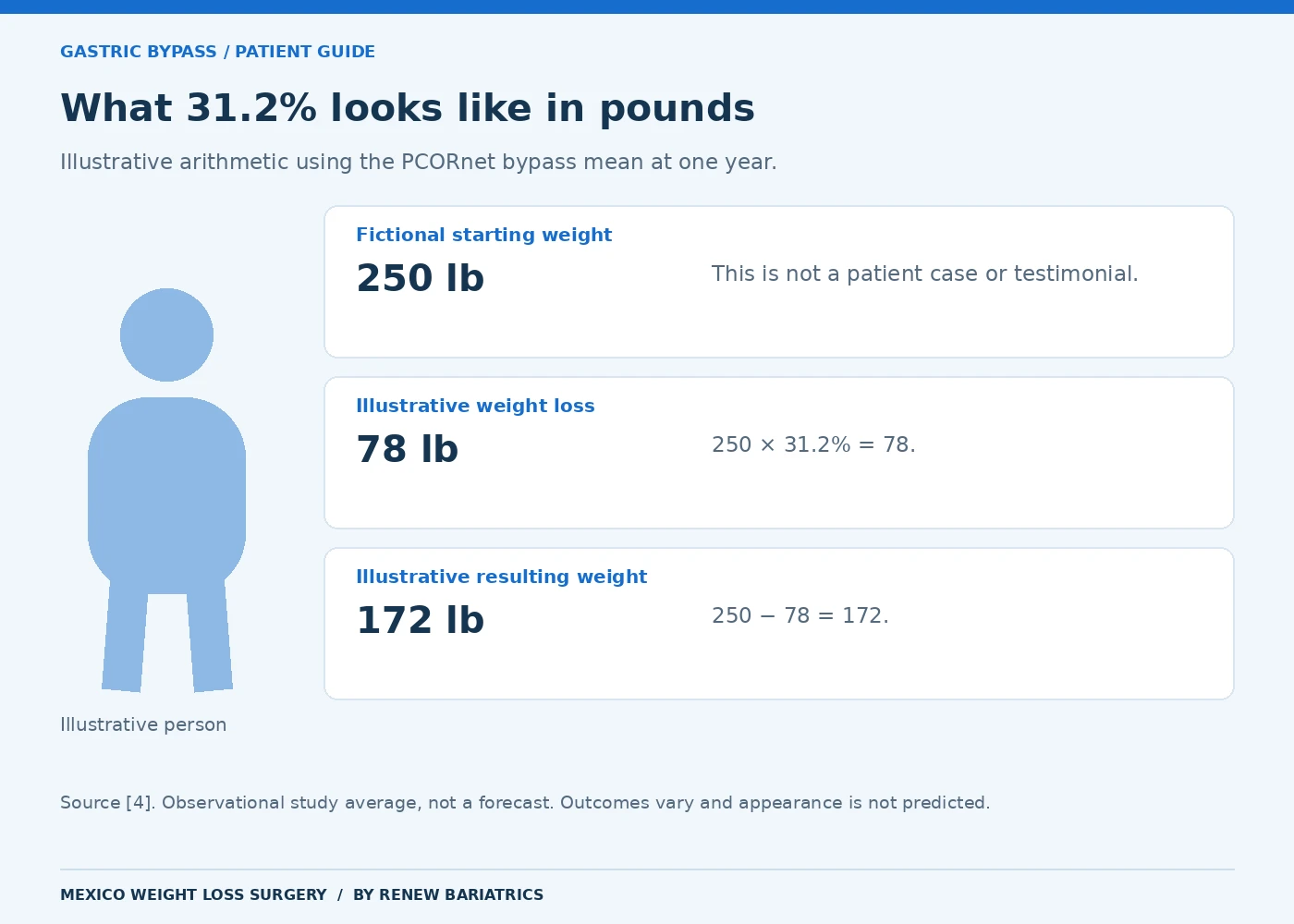
The PCORnet observational study reported mean total weight loss after Roux-en-Y bypass of 31.2% at one year and 25.5% at five years. It found greater average loss after bypass than sleeve, but treatment was not randomized and electronic health record follow-up was incomplete. These figures describe study populations, not Renew’s results or your expected outcome. [4]
Randomized long-term evidence adds context. In SLEEVEPASS, estimated mean excess weight loss at ten years was 51.9% after bypass and 43.5% after sleeve. The difference uses an excess-weight metric, not a percentage of all starting weight. The trial also found more esophagitis after sleeve. [5]
The ten-year SM-BOSS report did not find a statistically significant difference in total weight loss between groups in its intention-to-treat analysis. It also reported substantial conversions after sleeve and incomplete long-term follow-up. Different analyses and study populations can produce different comparisons; selecting only the most flattering figure gives a distorted impression. [6]
A fictional 250-pound example
Applying the PCORnet one-year bypass average of 31.2% to a fictional starting weight of 250 pounds produces 78 pounds of loss and a resulting weight of 172 pounds. This is a calculation, not a promise or a real patient outcome. Your weight trajectory may be very different. [4]
Ask for the time point whenever a result is presented. Early loss, lowest recorded weight and weight several years later answer different questions. Also ask whether the result includes people who missed follow-up, received medication or underwent another procedure. A photograph or a single success story cannot supply those details.
Diabetes and other health outcomes
In STAMPEDE, 29% of the bypass group reached an HbA1c of 6.0% or below at five years, with or without medication, compared with 5% assigned to intensive medical therapy alone. The trial enrolled 150 people with type 2 diabetes and compared treatment approaches from an earlier medication era. It does not establish that bypass cures diabetes or is superior to every current drug regimen. [7]
A separate PCORnet analysis of 9,710 people with diabetes found slightly higher remission and lower subsequent relapse after bypass than sleeve. It was observational; differences between patients may influence the comparisons. The distinction between remission and permanent cure is important because diabetes can recur. [8]
Possible benefits of bariatric surgery include improvements in blood pressure, sleep apnea, mobility and quality of life. The amount of improvement varies, and ongoing treatment may still be needed. [9]
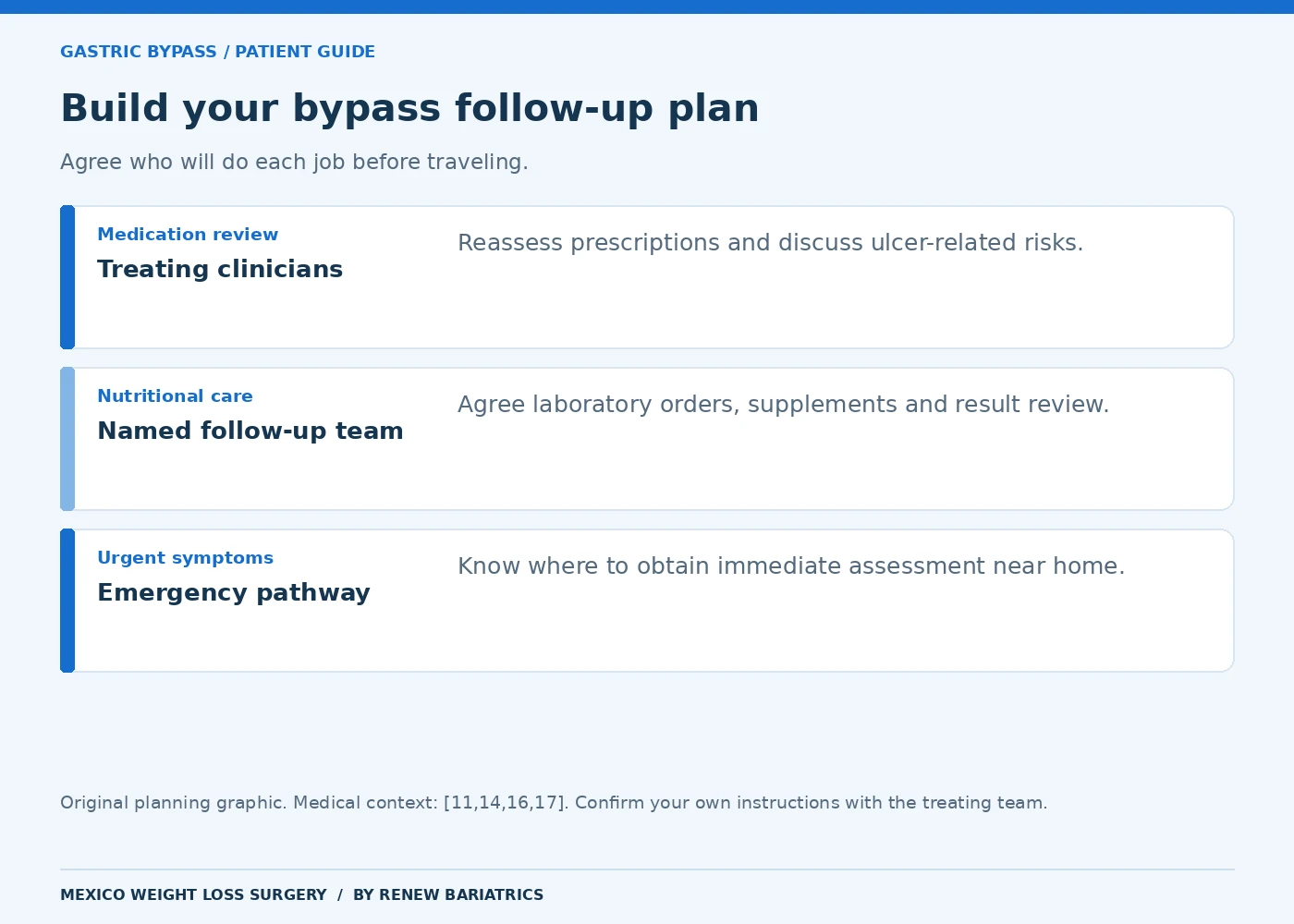
Before surgery, identify the clinicians who will reassess diabetes medicines, blood-pressure treatment and other prescriptions. Ask what monitoring information they need and how quickly you should report changes. Do not stop medicines because a patient testimonial says someone else no longer needed them after surgery.
Risks that belong in the decision
Early complications can include bleeding, infection, a leak, anesthesia-related problems and blood clots. Later concerns include bowel obstruction, hernia, ulcers, nutritional problems, gallstones, kidney stones and low blood sugar. Some complications require hospital treatment or another procedure, and rare complications can be fatal. [10]
The fact that an operation is widely performed does not replace a personal risk discussion. Ask how your prior surgery, health conditions and medication needs affect the assessment. Ask what the facility can manage immediately and when transfer would be necessary.
Request outcomes using plain definitions. For example, ask whether an advertised complication percentage includes emergency visits, dehydration admissions, reoperations and events managed after patients return home. Ask how many patients were included and how follow-up was collected. Without those details, two clinics’ percentages may not be comparable.
You also need a plan for unexpected care costs. Who pays for extra imaging, an extended stay, specialist treatment or transfer? What are the conditions and limits of any complication coverage? Obtain the actual terms rather than treating a marketing phrase as an insurance contract.
Ulcers, nicotine and anti-inflammatory medicines
An ulcer can develop at the connection between the pouch and intestine. The ASMBS review identifies smoking, NSAID use and some technical and patient factors as risks. Preventive acid-suppressing treatment is often used, but its duration should be individualized. [11]
Tell the team about ibuprofen, naproxen, aspirin, steroids and any medicines used for chronic pain. If a drug is medically necessary, the question is how to manage that need safely; do not independently discontinue prescribed treatment. Ask whether your ongoing medication requirements affect the choice of surgery.
Be candid about smoking, vaping and other nicotine exposure. An accurate history lets the clinical team make a plan. Concealing exposure to avoid postponement can leave important risks unaddressed. Ask what the program requires, how cessation will be supported, and when the requirement will be reassessed.
Dumping syndrome and low blood sugar
Dumping symptoms can occur after food moves rapidly through the altered digestive tract. Early symptoms often occur within about 30 minutes of a meal and may include cramps, diarrhea, lightheadedness or palpitations. Later symptoms, one to three hours after eating, can relate to low blood glucose. [12]
Not every episode of nausea, weakness or abdominal pain is dumping. Report recurring symptoms for assessment instead of diagnosing yourself from an online description. Ask the clinical team how to document the timing, food intake and symptoms and whether glucose monitoring is appropriate.
If you become faint, confused or severely unwell, seek medical help promptly. A nutrition appointment can help with a recurring meal-related pattern, but it is not a replacement for urgent evaluation when symptoms are severe. Your discharge plan should identify which symptoms require emergency care and which can be discussed through routine follow-up.
Supplements and lifelong monitoring
Bypass changes the absorption of some nutrients, and reduced intake adds another challenge. Deficiencies can contribute to anemia and bone problems. This is one reason the nutrition plan must continue after the initial weight-loss period. [13]
ASMBS advises lifelong vitamin/mineral supplementation after bariatric surgery, commonly involving a multivitamin and selected iron, calcium, vitamin D and B12 support. Your regimen must reflect laboratory results and individual needs rather than copying another patient’s supplement list. [14]
Make the monitoring arrangement specific before traveling. Record who will order blood tests, when testing is due, where results will be sent, and who will contact you if a result needs treatment. “My regular doctor will handle it” is only a plan if that clinician has agreed and has the relevant surgical information.
Include the recurring costs in your budget. Ask about options if you cannot tolerate a product or cannot afford the initial recommendation. Stopping all supplements without telling anyone is not a workable solution; the care team needs to help you find an appropriate alternative.
Preparing medications, meals and home support
Preparation should include an accurate medication review, required testing and instructions from the treating and anesthesia teams. GLP-1 medications deserve a specific discussion: current multisociety guidance permits many patients to continue treatment but identifies situations needing a different approach. Ask your clinicians to coordinate rather than following a blanket online stopping rule. [15]
Request written instructions that cover fasting, preoperative diet, diabetes monitoring and which medicines to take on the procedure day. If something is unclear, name the exact medicine and dose when asking. “Can I take my usual pills?” is too vague for a reliable answer.
Think through the first days at home before leaving for Mexico. Who will help with children, pets, shopping and lifting? Where will you obtain approved drinks and foods? How will you get to an appointment if you cannot drive? These questions are not cosmetic details; they determine whether the written recovery plan is practical in your household.
Pack your operative and discharge information with the same care as your passport. Ask for the procedure name, surgeon and facility details, medications, allergies, significant findings and contact information. Keep a digital copy and give a trusted companion access if you may need help communicating.
Recovery is a process, not a fixed travel package
After bypass, food texture advances in stages while healing progresses. The team’s instructions may move from liquids to puréed foods, then softer and firmer foods as appropriate. Do not use another clinic’s timetable as permission to advance early. [10]
Your discharge instructions should cover movement, wound care, bathing, lifting, medication and follow-up. MedlinePlus emphasizes ongoing follow-up and lifelong blood testing after gastric bypass. The details supplied by your treating team should take account of your procedure and recovery. [16]
Ask what you should do if pain, nausea or food intolerance interferes with the plan. Repeated vomiting, difficulty keeping fluids down, increasing abdominal pain, fever, chest pain or difficulty breathing warrant prompt clinical assessment. Do not wait for a routine appointment if symptoms are severe or worsening. [17]
Returning to work should be discussed in terms of actual tasks. A remote desk job is different from driving professionally or lifting heavy objects. Ask when restrictions can change and who provides the clearance. Leave room for slower recovery rather than making a nonrefundable work or travel commitment around the best-case estimate.
What happens if weight returns?
Additional weight treatment after bypass does not automatically mean the original operation was pointless. The useful starting point is a structured review of weight history, symptoms, current medicines, nutrition and, when indicated, anatomy. Ask what information is needed before proposing another intervention.
For selected patients with an enlarged gastrojejunal outlet after bypass, transoral outlet reduction, or TORe, can reduce the opening endoscopically. It is not suitable for every cause of weight regain and does not replace a comprehensive assessment. [18]
Your options discussion may include nutritional and behavioral support, obesity medication, endoscopic treatment or surgical revision. Ask which problem each option is intended to address and what evidence supports it in people with your original operation. A promise to “reset” weight loss without examining the cause is not a sufficient explanation.
Keep follow-up accessible even when you are disappointed with the scale. Bringing concerns early creates a chance to adjust treatment. A plan that only welcomes patients with ideal results is not the sort of long-term care arrangement you should seek.
Gastric bypass cost in Mexico
Renew’s public FAQ lists gastric bypass at $6,299 as checked for this draft. That is a published price, not a binding quote for an individual patient. Revision procedures and other bypass variants may be priced differently. Confirm your actual operation and current terms with the coordinator. [19]
Ask for a written breakdown covering surgical and anesthesia fees, hospital services, tests, medicines, transportation, accommodation and companion charges. Check flights separately. Clarify whether additional nights, investigations or treatment of a complication are included, excluded or subject to a separate coverage policy.
Compare offers using the same questions. A lower number can reflect a different length of stay, different services or exclusions. A higher number does not, by itself, prove better care. The useful comparison combines the clinical plan, verified qualifications, facility capability, continuity of care and total financial commitment.
Before paying, read the deposit, cancellation and rescheduling rules. Ask which requirements must be completed before travel and what happens if testing changes your eligibility. Keep written answers with your quote so the terms are not dependent on remembering a phone conversation.
Travel and continuity of care
CDC notes that postoperative travel adds risks and advises avoiding air travel for ten days after chest or abdominal surgery. Discuss this guidance and your individualized travel plan with the treating clinician, particularly if the package itinerary is shorter. Medical clearance is not the same as a hotel checkout date. [20]
Ask how long you should remain near the surgical facility, who reassesses you before departure, and what would delay travel. Consider the entire journey: airport waits, ground transfers, border delays, connections and the trip home from your arrival airport. Ask the team how these details affect their advice.
Arrange a local follow-up pathway in advance. If you need urgent care after returning, tell the treating clinician that you recently had surgery abroad and provide the records. Do not delay seeking care while trying to obtain permission from a remote coordinator.
Your consultation checklist
Ask these questions before making a final decision:
- Is the planned operation Roux-en-Y, and why is it the recommended choice for my history?
- How do reflux, diabetes, medicines and previous operations affect the recommendation?
- What benefits are realistic, and what outcomes should we monitor beyond weight?
- What are my main early and long-term risks?
- Who will handle nutrition, laboratory tests and medication adjustments at home?
- What happens medically and financially if recovery does not follow the planned schedule?
- What must be confirmed before I purchase flights or pay the balance?
- How will the clinical team answer questions that the coordinator cannot resolve?
You do not need to arrive with every answer. You do need a process that identifies missing information and resolves it before treatment. Keep a short list of open items and ask who owns each follow-up.
Frequently asked questions
Is bypass the same as a sleeve?
No. Bypass creates a pouch and reroutes the intestine; sleeve removes much of the stomach without the same intestinal reconstruction. Their advantages, risks and follow-up considerations differ. [2]
Will bypass cure my diabetes?
Some people achieve remission or need less medication, but recurrence is possible. The goal is improved health and durable control, with continued monitoring rather than an assumption of permanent cure. [8]
Can I stop supplements when my weight stabilizes?
No. The anatomical changes remain after weight stabilizes. Continue your prescribed regimen and testing, and ask your team to adjust treatment when results or tolerance change. [14]
Will a coordinator choose my procedure?
The coordinator helps organize questions, records and logistics. Procedure selection and clinical approval belong with the treating professionals. Ask how that review is completed and how its recommendations will be communicated to you.
What is the next step with Renew?
Request a coordinator conversation, provide an accurate health history and complete the clinical review process. Review the proposed procedure, alternatives, written quote and aftercare plan together before choosing travel dates. An informed decision is a stronger starting point than a rushed reservation.
Program information related to this guide
For information about care through our parent organization, explore Renew Bariatrics’ gastric bypass program. Ask the team to confirm availability, your eligibility and the written scope of care.
Gastric bypass vs. gastric sleeve
These options change different structures. Your anatomy, symptoms, health history and follow-up needs guide the choice; neither is automatically better for everyone.
| What to compare | Gastric bypass → | Gastric sleeve → |
|---|---|---|
| Anatomy | Creates a pouch and reroutes intestine. | Removes part of the stomach without intestinal bypass. |
| Reflux | Often considered for patients with reflux. | Can cause or worsen reflux. |
| Tradeoff | Bowel complications and nutrient deficiencies require discussion. | Permanent stomach removal requires discussion. |
| Long-term care | Supplements, laboratory checks and follow-up are essential. | Nutrition and long-term follow-up remain necessary. |
Comparison references: Mayo Clinic: Gastric bypass ↗ · Mayo Clinic: Sleeve gastrectomy ↗
These options are not interchangeable for every person. The treating clinician must assess your anatomy, medical history and goals.
Further reading
Explore gastric bypass care with Renew ↗. Confirm the current care arrangements and your individual quote with the team.
Discuss your options with Renew.
Talk with a coordinator about gastric bypass, your goals and the information needed for clinical review. The treating team determines suitability and the care plan.
Call 844-736-3963 Complete health questionnaire ↗The questionnaire opens Renew’s existing intake. This review site does not collect health information.
References & evidence notes
Sources checked November 2026. Research findings are not a forecast for an individual or outcomes for Renew’s own program. Review study populations, methods and limitations alongside the reported results.
- ASMBS. Bariatric Surgery Procedures ↗Professional society overview; procedure differences and lifelong care.
- Johns Hopkins Medicine. Roux-en-Y Gastric Bypass Weight-Loss Surgery ↗Institutional patient education; operative anatomy and assessment.
- ASMBS and IFSO, 2022. Indications for Metabolic and Bariatric Surgery ↗Joint guideline; clinical indications are not individualized approval or insurance criteria.
- Arterburn et al., 2018. Comparative Effectiveness and Safety of Bariatric Procedures for Weight Loss ↗Observational PCORnet cohort; total weight loss, nonrandomized design and missing data. doi:10.7326/M17-2786.
- Salminen et al., 2022. SLEEVEPASS randomized clinical trial: ten-year outcomes ↗Randomized trial follow-up; excess weight loss and reflux outcomes. Not a Renew cohort.
- SM-BOSS investigators, 2025. Long-Term Outcomes of Roux-en-Y Gastric Bypass vs Sleeve Gastrectomy ↗Randomized trial long-term follow-up; incomplete follow-up, conversions and analysis population affect interpretation.
- Schauer et al., 2017. Bariatric Surgery versus Intensive Medical Therapy for Diabetes — 5-Year Outcomes ↗STAMPEDE randomized trial, 150 participants; HbA1c target with or without medications, not a permanent-cure endpoint.
- McTigue et al., 2020. Comparing the 5-Year Diabetes Outcomes of Sleeve Gastrectomy and Gastric Bypass ↗PCORnet observational study of 9,710 patients; remission and relapse differ, residual confounding possible.
- NIDDK. Weight-loss Surgery Benefits ↗Patient education; potential health benefits, not guarantees.
- Mayo Clinic. Gastric bypass (Roux-en-Y) ↗Patient education; operative risks, recovery and nutrition.
- ASMBS Clinical Issues Committee, 2024. Literature review on risk factors, screening recommendations, and prophylaxis for marginal ulcers ↗Society review; smoking, NSAIDs and prevention considerations. Not an individualized prescription.
- NIDDK. Symptoms & Causes of Dumping Syndrome ↗Early and late symptoms; other causes of postoperative symptoms require assessment.
- NIDDK. Weight-loss Surgery Side Effects ↗Immediate and later risks; general bariatric information.
- ASMBS. FAQs of Bariatric Surgery ↗Long-term supplementation and annual nutritional monitoring.
- American Society of Anesthesiologists. Drugs for Diabetes or Weight Loss: What To Know Before Surgery ↗Patient explanation of 2024 multisociety guidance; individualized anesthesia and medication planning.
- MedlinePlus. Gastric bypass surgery — discharge ↗Discharge education and ongoing care; does not replace the treating team’s instructions.
- Johns Hopkins Bayview Medical Center. Discharge Instructions for Bariatric (Obesity) Surgery ↗Institutional discharge education; symptoms that require prompt assessment.
- Johns Hopkins Medicine. Transoral Outlet Reduction ↗Endoscopic treatment for selected patients with weight regain after bypass; anatomical evaluation required.
- Renew Bariatrics. Bariatric Surgery in Mexico FAQs ↗Published business pricing checked November 2, 2026; confirm current individualized quote. Not independent medical evidence.
- CDC Yellow Book. Medical Tourism ↗Travel-associated risks and ten-day air-travel guidance after chest/abdominal surgery; reconcile with individualized itinerary.
- NIDDK. Types of Weight-loss Surgery ↗Government patient information; bypass reversibility and procedure differences.