

Jump to a section
Anatomy illustrationCompare proceduresRelated ProceduresWhat gastric sleeve surgery changesWho may be considered for a sleeve?Reflux deserves a separate discussionHow much weight loss does research show?Benefits beyond the scaleRisks and possible later problemsPreparing for surgery without guessingEating, drinking and recovery after a sleeveLong-term follow-up and weight regainSleeve versus other optionsCost and planning bariatric surgery in MexicoQuestions to bring to your coordinator and clinical teamFrequently asked questionsYour next stepReferencesGastric sleeve surgery can be a substantial step in treating obesity, but the right decision involves more than choosing a date or comparing package prices. You need to understand what changes permanently, how reflux and existing health conditions affect the choice, what published results actually measure, and who will support you after you return home.
This guide explains sleeve gastrectomy for people considering weight loss surgery in Mexico. It separates independent medical evidence from practical questions to ask Renew Bariatrics. Research from another hospital or country does not establish Renew’s own results. Your clinical team must determine whether a sleeve is appropriate and provide your individualized preparation, recovery and follow-up instructions.
Understand the anatomy
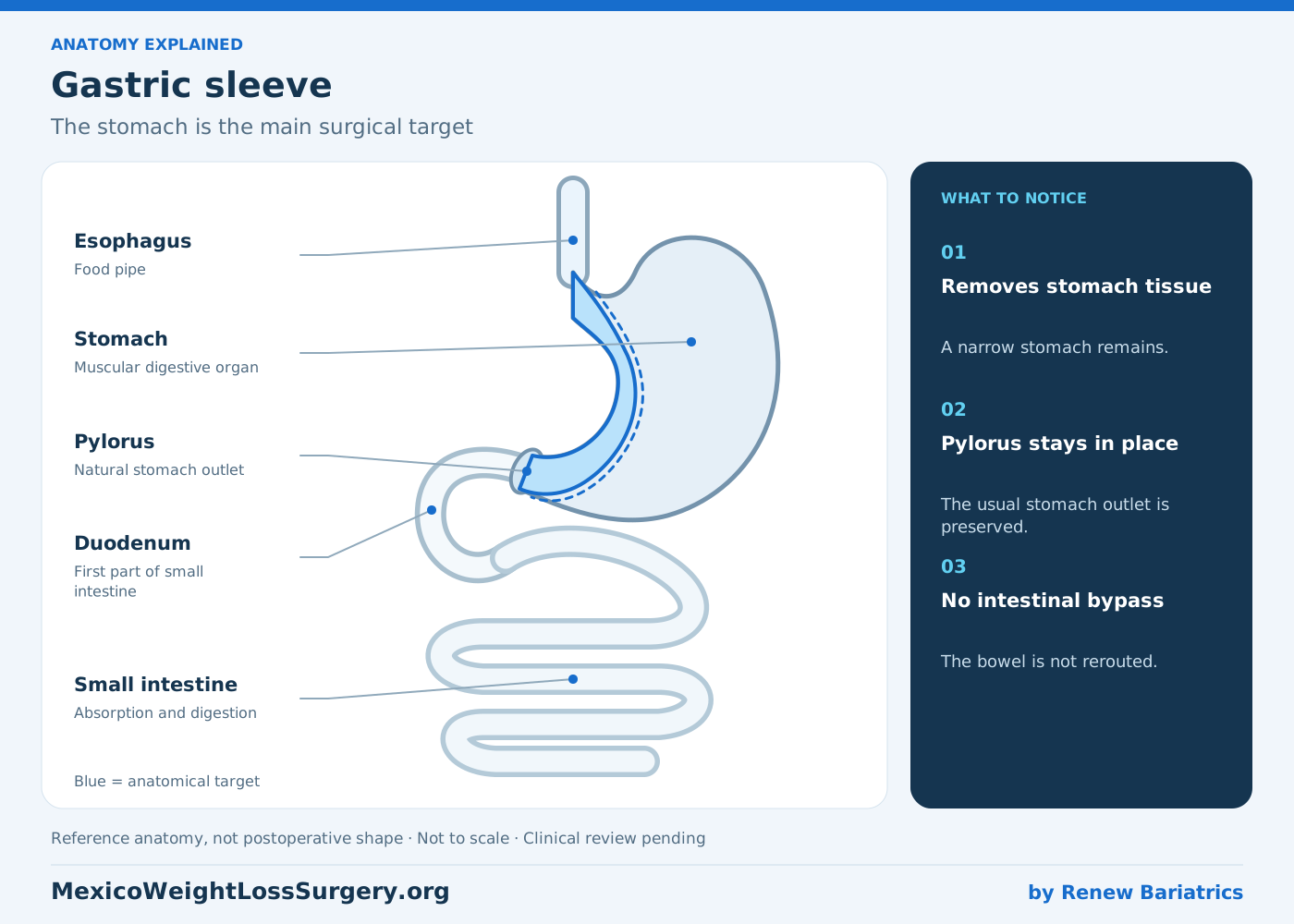
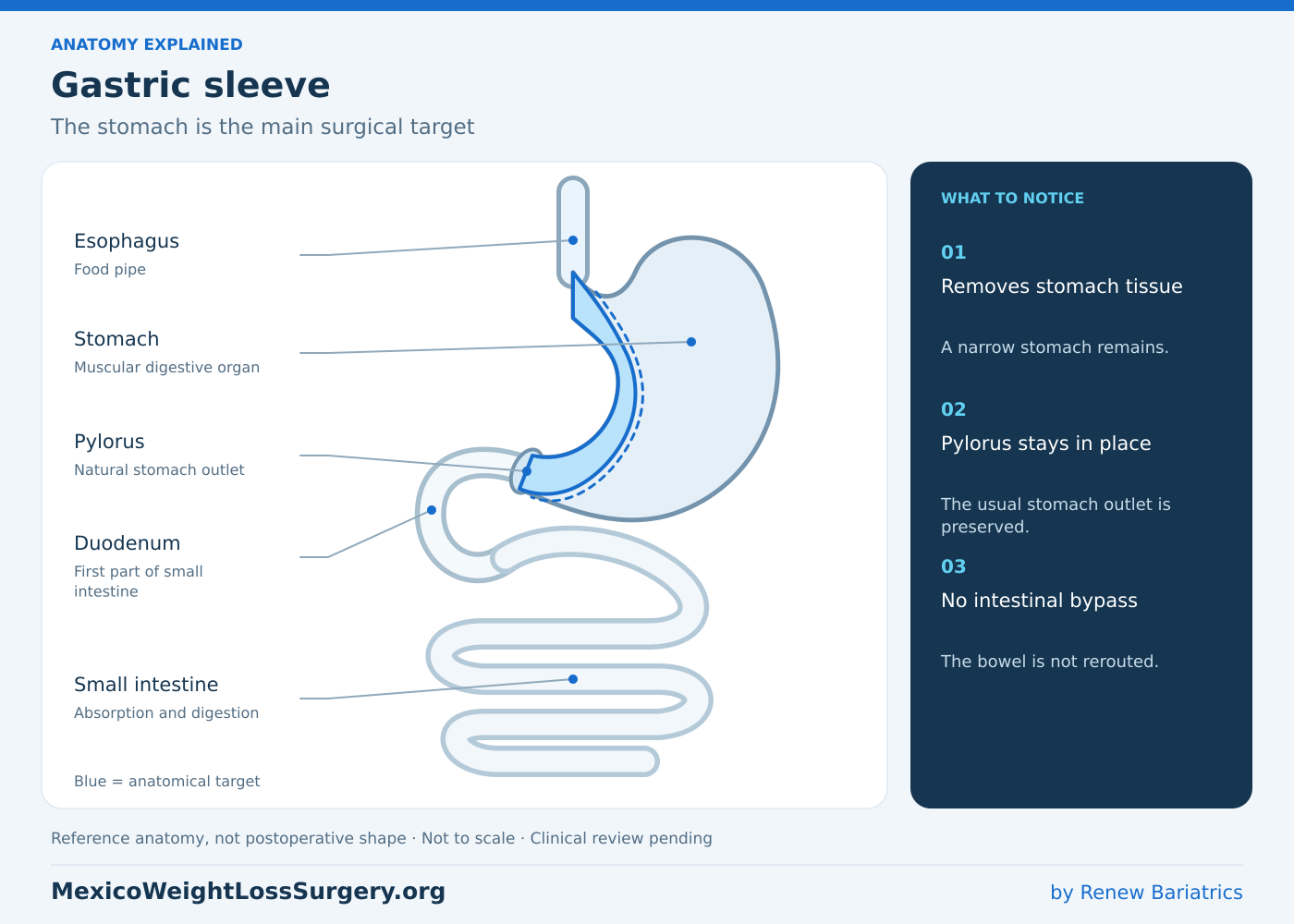
A simplified, labeled view of the structures and treatment area. Select the image to view it at full size.
Anatomy references: Mayo Clinic: Sleeve gastrectomy ↗ · ASMBS: Roux-en-Y Gastric Bypass ↗
What gastric sleeve surgery changes
A sleeve gastrectomy removes most of the stomach and leaves a narrow stomach tube. Food continues through the usual intestinal route; the intestines are not rerouted. The removed stomach cannot simply be put back. The operation changes stomach capacity and biological signals involved in appetite, so describing it only as a smaller container misses part of how it works. [1]
Sleeve surgery is usually performed through small abdominal incisions under general anesthesia. It is still major surgery, with a staple line that must heal. Small incisions do not mean there is no internal healing period. [2]
Ask the surgeon to explain the proposed operation using your own medical history. If a hiatal hernia, previous stomach operation or unusual anatomy may change the plan, discuss that before signing the consent. Clarify what would happen if the operative findings differ from the initial assessment, including how additional procedures would be authorized and charged.
Who may be considered for a sleeve?
Current ASMBS/IFSO guidance recommends metabolic and bariatric surgery at BMI 35 or above regardless of associated conditions, and recommends it for people with type 2 diabetes and BMI 30 or above. Surgery may also be considered at BMI 30–34.9 when nonsurgical treatment has not produced durable weight or health improvement. These recommendations are not a booking approval or an insurance coverage rule. [3]
Your assessment needs to address readiness, health risks, nutrition, medications, previous treatment and the ability to maintain follow-up. A BMI calculator cannot decide among sleeve, bypass, medical treatment or an endoscopic option. The surgeon makes the final judgment about the appropriate operation and timing. [3]
Before your conversation, make a short history of what you have already tried. Include how long each treatment was used, what helped, adverse effects, changes in weight, and reasons treatment stopped. This is more useful than describing yourself as having “failed every diet.” It gives the clinical team information about barriers that a procedure may or may not address.
Bring your current medication list, previous surgical reports if relevant, and specific goals. “I want better control of diabetes,” “I cannot comfortably climb stairs,” and “I need to understand my reflux risk” lead to more useful discussions than a target weight alone.
Reflux deserves a separate discussion
Sleeve surgery can cause new reflux or worsen existing heartburn. For someone with significant reflux, this may materially change the choice of operation. In the randomized SLEEVEPASS study, endoscopic esophagitis at ten years was more common after sleeve than after Roux-en-Y bypass. That finding supports a careful preoperative reflux assessment rather than assuming every smaller stomach is equivalent. [4]
Tell the team about nighttime burning, sour fluid in the mouth, trouble swallowing, regular antacid use, prior endoscopy, and any diagnosis of esophagitis or Barrett’s esophagus. Do not omit symptoms because you hope to qualify for the less expensive procedure. Ask whether your symptoms require investigations and how the findings would affect the recommendation.
Useful questions include: Why is sleeve appropriate despite my reflux history? What is the plan if symptoms worsen? Who would arrange endoscopy after I return home? Under what circumstances would conversion to bypass be discussed? Ask for answers that explain your situation, not reassurance that reflux “usually settles.”
How much weight loss does research show?
Use a named study, a defined time point and a clear metric when comparing claims. In the large observational PCORnet cohort, mean total weight loss after sleeve was 25.2% at one year and 18.8% at five years. The study was not randomized and included missing follow-up data, so these are population estimates rather than individual predictions. [5]
Longer follow-up matters. The SM-BOSS randomized trial reported substantial weight loss after both sleeve and bypass beyond ten years, but complete ten-year follow-up was available for about two-thirds of participants. Procedure conversions and differences between intention-to-treat and per-protocol analyses complicate a simple ranking of operations. [6]
An average does not tell you the range of individual results, whether another treatment was later added, or how closely a participant resembled you. Request a realistic discussion of your starting weight, health goals and longer-term treatment plan. Be wary of a claim that everyone loses a fixed number of pounds or reaches a specific clothing size.
A hypothetical example in pounds
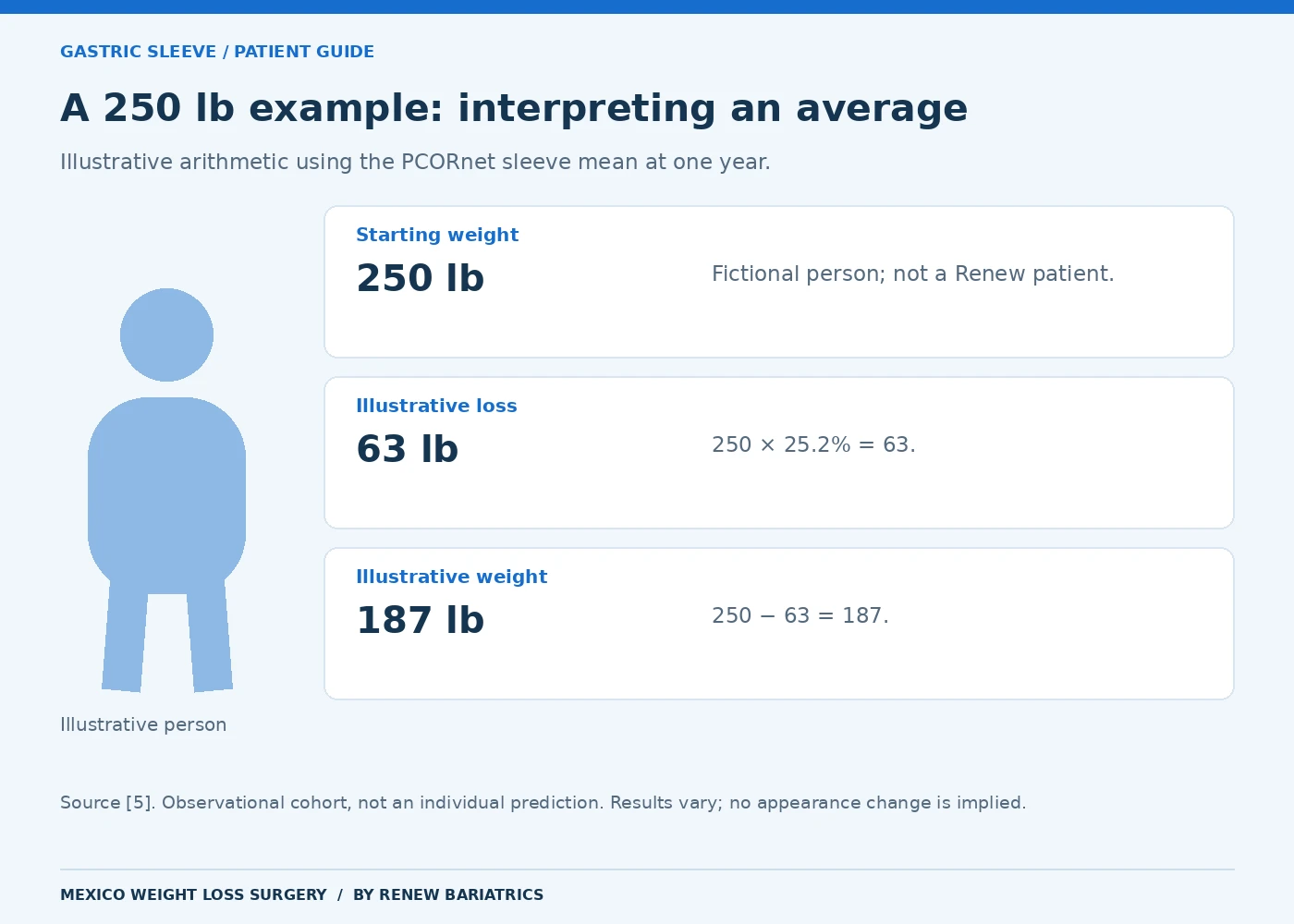
For a fictional person starting at 250 pounds, 25.2% total weight loss would equal 63 pounds, leaving 187 pounds. This arithmetic applies the PCORnet one-year mean to an invented starting weight. It is not a forecast, a patient testimonial or a prediction of appearance. People may lose more or less. [5]
Total weight loss uses starting body weight as the denominator. Excess weight loss uses a calculated amount above a reference weight. A claim of “60% excess weight loss” therefore does not mean losing 60% of your starting weight. Ask which measure is being used before comparing a surgeon’s results with an advertisement or another study.
Benefits beyond the scale
Weight loss surgery may improve obesity-associated problems such as type 2 diabetes, high blood pressure, sleep apnea and joint symptoms. Improvement is not guaranteed, and a person may still need medication or other treatment afterward. [7]
In STAMPEDE, people with type 2 diabetes were randomized to intensive medical therapy alone or combined with sleeve or bypass. At five years, the proportion reaching the study’s HbA1c target of 6.0% or below, with or without medication, was 23% after sleeve versus 5% with medical therapy alone. This was not a definition of permanent diabetes cure, and the trial preceded today’s newer obesity medications. [8]
Choose several outcomes to track with your clinicians: weight trend, glucose control, blood pressure, physical function, sleep symptoms and quality of life. That keeps your plan focused on health rather than judging the whole operation by one weekly weigh-in. Ask who will review diabetes and blood-pressure medicines as your needs change; do not adjust them on your own.
Risks and possible later problems
Sleeve risks include bleeding, infection, anesthesia complications, blood clots and leakage from the stomach staple line. Later problems can include narrowing, reflux, persistent nausea or vomiting and nutritional deficiencies. Rarely, surgical complications can be fatal. [2]
Rapid weight loss can contribute to gallstones, and deficiencies may cause problems such as anemia or bone disease. A procedure that does not bypass the intestine still requires attention to nutrition. [9]
Ask for the treating team’s outcomes with a clear definition and denominator. “Very low complications” is not enough: which complications, how many patients, what dates, what follow-up, and were problems treated elsewhere counted? An international average and a clinic’s own results answer different questions. Neither eliminates your individual risk.
Before traveling, request a written escalation plan. It should distinguish routine questions from symptoms needing immediate assessment and state whom to contact after hours. Examples of concerning postoperative symptoms include difficulty breathing, chest pain, fever, increasing abdominal pain, persistent vomiting or inability to drink; seek prompt medical assessment rather than waiting for a coordinator message. Local emergency services are appropriate for severe or rapidly worsening symptoms. [10]
Preparing for surgery without guessing
Preparation should be a coordinated process. Your team may request laboratory testing and assessments related to heart, lung, sleep or other medical conditions. A dietitian can help you understand the changes ahead. The exact tests and timing depend on your situation. [2]
Ask for one current set of instructions with the person responsible for resolving conflicts. If your primary doctor, surgeon and anesthesia team give different medication directions, ask them to reconcile those instructions before the procedure. A general website list should never substitute for your prescribed plan.
This is especially relevant for GLP-1 medications. Multisociety guidance allows many patients to continue them before surgery, while some circumstances require additional precautions or a different plan. The prescribing clinician, surgeon and anesthesiologist should coordinate the decision; do not apply a blanket stop interval from an unrelated article. [11]
Create a preparation checklist with due dates: records submitted, medical questions answered, written quote received, travel approved, recovery help arranged and follow-up appointments identified. Keep a copy accessible on your phone and give your companion the emergency contact instructions. A well-organized checklist makes unanswered questions visible before travel becomes difficult to change.
Eating, drinking and recovery after a sleeve
Your postoperative eating plan normally progresses through stages rather than returning immediately to ordinary meals. Follow your own team’s schedule and tolerance guidance. Do not advance because another patient on social media reached a stage sooner. [12]
Hydration, adequate protein and prescribed vitamin/mineral supplementation are ongoing priorities. ASMBS describes lifelong supplementation and regular monitoring as part of bariatric care. Targets and products should be individualized, particularly when other medical conditions affect fluid, protein or supplement needs. [13]
Ask the dietitian to translate instructions into foods you can actually obtain and tolerate at home. Discuss lactose intolerance, cultural food preferences, vegetarian eating, shift work and your budget before departure. A plan built around products you cannot buy is not a complete plan.
Keep a simple record of what you can drink, foods tolerated, medicines taken and questions for follow-up. If you cannot meet the plan because of nausea, pain or swallowing difficulty, contact the clinical team instead of repeatedly forcing intake. The goal is to identify the obstacle, not to prove willpower.
Return-to-work and lifting decisions should reflect your job and recovery. Desk work, driving, lifting children and physically demanding shifts create different requirements. Request written restrictions and an explanation of when they will be reassessed. Arrange practical help before surgery so you are not relying on an optimistic recovery estimate.
Long-term follow-up and weight regain
Obesity is a chronic disease, and surgery does not remove the need for future treatment. The ASMBS/IFSO indications document recognizes that adjunctive treatment or revision may be needed over time. [3]
Weight regain should prompt an assessment rather than blame. Bring the full pattern: lowest weight, timing of regain, hunger changes, medicines, eating difficulties and new symptoms. The relevant question is which factors are contributing and which treatments address them. A surgical revision is not automatically the first or best answer.
Ask how follow-up will work across borders. Who orders laboratory tests? Who interprets them? Who treats a deficiency? Who reviews persistent reflux or vomiting? Who communicates with your local doctor? “Lifetime support” should be translated into named services, availability, response expectations and costs.
For people planning pregnancy, discuss timing and nutritional monitoring before surgery. ASMBS advises avoiding pregnancy for 12–18 months after bariatric surgery, with individualized preconception planning. [13] Do not use this as your only pregnancy advice; involve your obstetric and bariatric clinicians.
Sleeve versus other options
Roux-en-Y bypass changes the intestinal route and may be preferable in some reflux situations, but it adds its own nutritional and intestinal risks. Endoscopic sleeve gastroplasty uses internal sutures rather than removing stomach tissue. The word “sleeve” appears in both names, but they are not the same intervention. [1],[14]
Medical treatment also deserves a real discussion. Ask what structured nutrition support, behavioral care and obesity medication could offer in your case, including costs, tolerability and what happens if treatment stops. The comparison should be between complete treatment plans, not a one-time operation price and a single month of medication.
If you have already had a sleeve, a first-operation guide is not enough. Use the revision and sleeve-to-bypass guides to prepare for a review of your existing anatomy, symptoms and goals. TORe targets the outlet after gastric bypass; it is not the equivalent procedure for an existing sleeve. [17]
Cost and planning bariatric surgery in Mexico
Renew’s public FAQ lists gastric sleeve at $4,899 when checked for this draft. Treat that as published business information, not your final quote. Confirm the current price, eligibility, facility, surgeon, inclusions and exclusions directly with the team. [15]
Request an itemized written explanation of what you are buying. Ask separately about preoperative testing, surgeon and anesthesia fees, hospital stay, medication, ground transportation, accommodation, companion costs, flights, additional nights, and care if complications occur. Do not infer that an “all-inclusive” label answers every item.
Calculate two budgets: the planned journey and a contingency scenario. Include time away from work, follow-up appointments, supplements and any expenses not covered by insurance. Clarify cancellation, rescheduling and refund terms before paying. Comparing a headline price without these details can hide meaningful differences between offers.
Travel is part of the clinical plan. CDC warns that surgery and travel can increase clot risk and advises against flying for ten days after chest or abdominal surgery. If a proposed itinerary is shorter, explicitly discuss that guidance and your circumstances with the treating clinician before buying flights. A standard package schedule is not individualized medical clearance. [16]
Questions to bring to your coordinator and clinical team
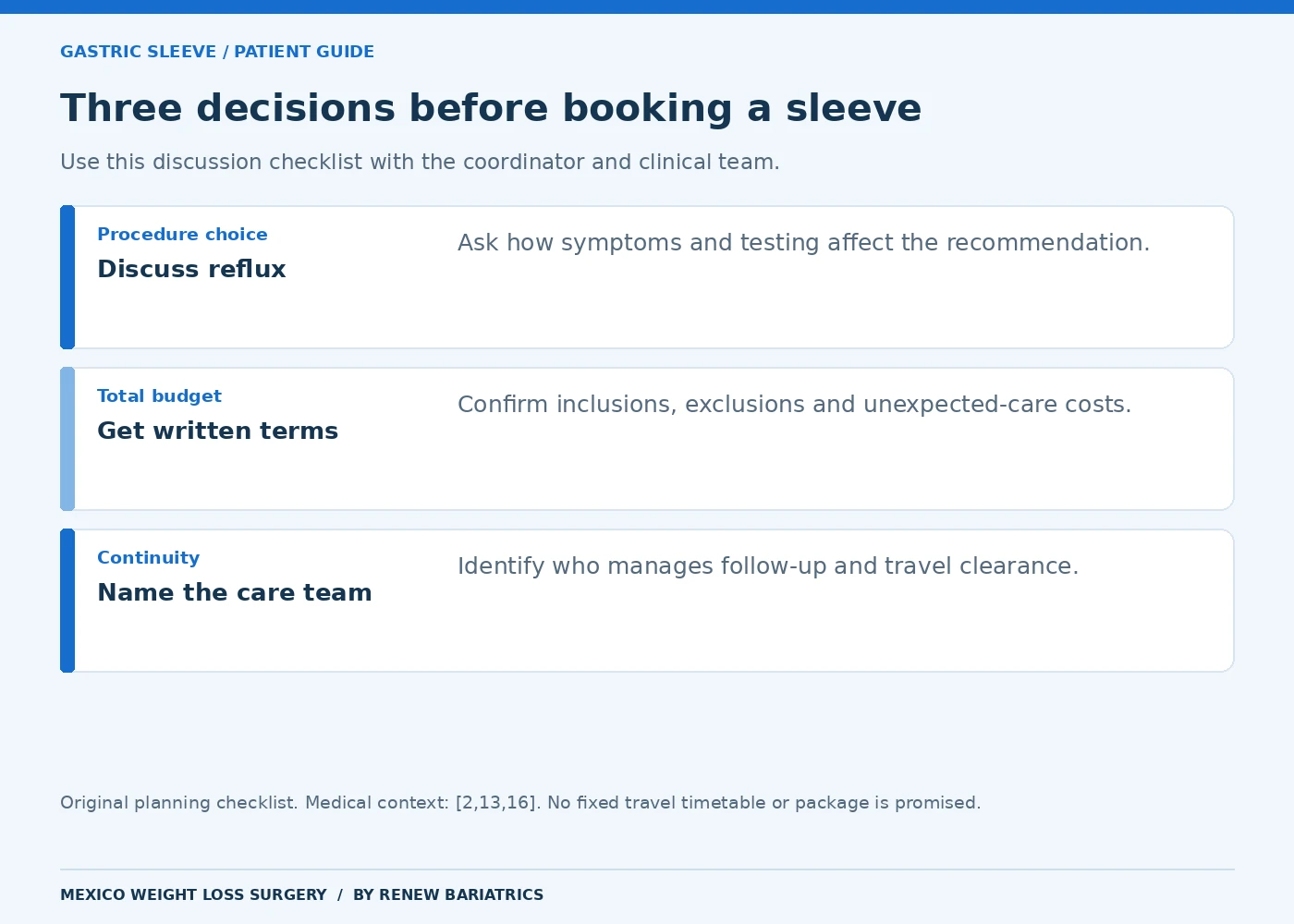
Use the coordinator conversation to organize the process and resolve logistics. Clinical suitability, procedure selection, medications and travel clearance belong with the treating professionals. Ask how your questions will reach that team and how you will receive the answers.
- Why is sleeve being recommended for me rather than bypass or another treatment?
- What do my reflux symptoms or prior endoscopy findings mean for that choice?
- Which tests or records remain outstanding before a final decision?
- What outcomes are realistic for someone with my history, and how will progress be assessed?
- What exactly is included in the written quote, and what could trigger additional costs?
- What is the complication pathway while I am in Mexico and after I return home?
- Who will manage laboratory monitoring, nutrition and medication changes over the next year?
- What information will my local doctor receive before I leave?
Take notes on the answers and unresolved items. A useful next step is a completed clinical review and a clear written plan, not pressure to choose a date while important questions remain unanswered.
Frequently asked questions
Is gastric sleeve reversible?
The removed portion of stomach is permanent. A later conversion to another operation is possible in selected circumstances, but that is another treatment decision rather than restoring the original stomach. [1]
Will I still need vitamins?
Yes. Sleeve does not eliminate the need for prescribed supplementation and long-term nutritional monitoring. Ask for the exact regimen and testing schedule that apply to you. [13]
Can I choose sleeve solely because it costs less?
Price matters, but ask the clinical team whether the cheaper procedure is appropriate for your reflux, health conditions and goals. A reasonable comparison includes future monitoring and potential additional treatment, not just the first invoice.
Does a surgeon’s best before-and-after photo show what I should expect?
No. A selected photograph does not show the full distribution of results, complications or follow-up. Ask for outcome data and discuss your own goals. Use images to understand one person’s experience, not to choose an expected body shape.
What should I do next?
Gather your questions and medical history, then speak with Renew’s coordinator about the review process. Complete the health questionnaire accurately. The next decision should follow clinical assessment, a clear explanation of alternatives and a written plan you understand.
Program information related to this guide
For information about care through our parent organization, explore gastric sleeve surgery at Renew Bariatrics. Ask the team to confirm availability, your eligibility and the written scope of care.
For patient examples, view gastric sleeve before-and-after photos from Renew Bariatrics. These are sleeve patient examples; they do not predict an individual result or represent results of other procedures.
Gastric sleeve vs. gastric bypass
These options change different structures. Your anatomy, symptoms, health history and follow-up needs guide the choice; neither is automatically better for everyone.
| What to compare | Gastric sleeve → | Gastric bypass → |
|---|---|---|
| Anatomy | A stomach-reducing operation. | A small pouch plus intestinal rerouting. |
| Reflux | Reflux can develop or worsen. | May be considered when reflux is an important concern. |
| Follow-up | Lifelong nutritional monitoring remains important. | Requires ongoing supplementation and nutritional monitoring. |
| Decision point | Discuss permanence and reflux risk. | Discuss bowel-related risks, ulcers and nutritional effects. |
Comparison references: Mayo Clinic: Sleeve gastrectomy ↗ · ASMBS: Roux-en-Y Gastric Bypass ↗
These options are not interchangeable for every person. The treating clinician must assess your anatomy, medical history and goals.
Further reading
Explore gastric sleeve care with Renew ↗. Confirm the current care arrangements and your individual quote with the team.
Discuss your options with Renew.
Talk with a coordinator about gastric sleeve, your goals and the information needed for clinical review. The treating team determines suitability and the care plan.
Call 844-736-3963 Complete health questionnaire ↗The questionnaire opens Renew’s existing intake. This review site does not collect health information.
References & evidence notes
Sources checked November 2026. Research findings are not a forecast for an individual or outcomes for Renew’s own program. Review study populations, methods and limitations alongside the reported results.
- NIDDK. Types of Weight-loss Surgery ↗Government patient education; anatomy and preparation.
- Mayo Clinic. Sleeve gastrectomy ↗Patient education; risks, evaluation and procedure.
- ASMBS and IFSO, 2022. Indications for Metabolic and Bariatric Surgery ↗Joint guideline; clinical indications are not individualized approval or insurance criteria.
- Salminen et al., 2022. SLEEVEPASS randomized clinical trial: ten-year outcomes ↗Randomized trial follow-up; excess weight loss and reflux outcomes. Not a Renew cohort.
- Arterburn et al., 2018. Comparative Effectiveness and Safety of Bariatric Procedures for Weight Loss ↗Observational PCORnet cohort; total weight loss, nonrandomized design and missing data. doi:10.7326/M17-2786.
- SM-BOSS investigators, 2025. Long-Term Outcomes of Roux-en-Y Gastric Bypass vs Sleeve Gastrectomy ↗Randomized trial long-term follow-up; incomplete follow-up, conversions and analysis population affect interpretation.
- NIDDK. Weight-loss Surgery Benefits ↗Patient education; potential health benefits, not guarantees.
- Schauer et al., 2017. Bariatric Surgery versus Intensive Medical Therapy for Diabetes — 5-Year Outcomes ↗STAMPEDE randomized trial, 150 participants; HbA1c target with or without medications, not a permanent-cure endpoint.
- NIDDK. Weight-loss Surgery Side Effects ↗Immediate and later risks; general bariatric information.
- Johns Hopkins Bayview Medical Center. Discharge Instructions for Bariatric (Obesity) Surgery ↗Institutional discharge education; symptoms that require prompt assessment.
- American Society of Anesthesiologists. Drugs for Diabetes or Weight Loss: What To Know Before Surgery ↗Patient explanation of 2024 multisociety guidance; individualized anesthesia and medication planning.
- Johns Hopkins Medicine. Gastric Sleeve Surgery ↗Institutional education on sleeve recovery; local protocols can differ.
- ASMBS. Life After Bariatric Surgery ↗Lifelong supplements, nutrition and pregnancy planning; individual instructions remain necessary.
- Johns Hopkins Medicine. Endoscopic Sleeve Gastroplasty ↗Explains ESG versus surgical sleeve; endoscopic suturing does not remove stomach tissue.
- Renew Bariatrics. Bariatric Surgery in Mexico FAQs ↗Published business pricing checked November 2, 2026; confirm current individualized quote. Not independent medical evidence.
- CDC Yellow Book. Medical Tourism ↗Travel-associated risks and ten-day air-travel guidance after chest/abdominal surgery; reconcile with individualized itinerary.
- Johns Hopkins Medicine. Endoscopic Weight Loss Program ↗Distinguishes gastric bypass outlet reduction from revision of sleeve anatomy.