
Jump to a section
Compare proceduresRelated ProceduresBuild the handoff before you leave homeLeave with a complete discharge planRecognize symptoms that should not waitVomiting and poor intake deserve attentionDiet stages are individualizedMake hydration and protein practicalSupplements are part of treatmentBlood tests need an owner and a scheduleYour procedure determines the nutritional burdenReview medicines with a clinician or pharmacistPain medicines, ulcers and common late problemsDumping symptoms and low blood sugarRebuild strength as well as losing weightEmotional health, alcohol and reproductive planningMake long-term appointments usefulQuestions to ask Renew before bookingYour next stepReferencesBariatric aftercare starts before you travel and continues after the early recovery period ends. It includes healing, nutrition, medication review, laboratory monitoring, physical function and support when circumstances change. A successful discharge is one milestone; it is not the end of treatment for a chronic condition. Professional guidance emphasizes ongoing follow-up and lifelong nutritional care after bariatric surgery. [1]
This guide explains what to organize and what to ask your team. It is not a substitute for your discharge instructions, and it does not establish Renew's current postoperative protocol. The plan must match your exact operation, health conditions, test results and recovery. Sleeve, Roux-en-Y bypass, duodenal switch, SADI-S and revisional surgery do not have identical nutritional needs. Endoscopic treatments such as ESG or TORe also require their own instructions. After TORe, the nutritional obligations created by the original bypass still matter.
Build the handoff before you leave home
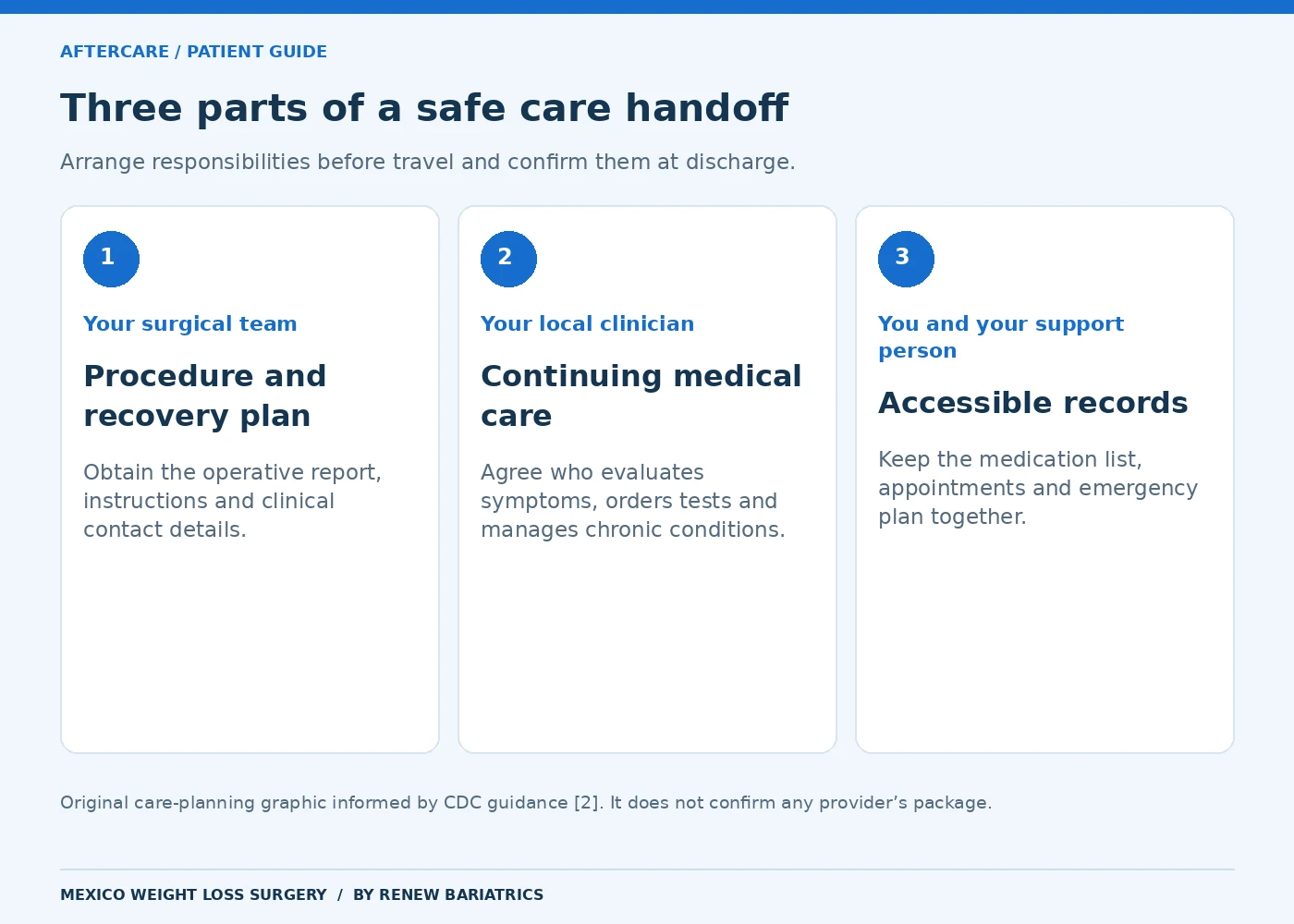
For treatment abroad, identify who will provide care after you return. The CDC advises planning follow-up and obtaining medical records, rather than waiting until a complication makes the arrangements urgent. Tell your local clinician about the procedure and travel plans in advance. Ask whether they can handle routine follow-up, which issues need a bariatric specialist, and how results will be shared. [2]
Use names and dates, not broad promises. “My primary-care appointment is booked” is more useful than “I can call someone if needed.” Ask the surgical team who handles questions during your stay, after hours and after you leave Mexico. Clarify whether a coordinator routes messages to a clinician or provides only logistical help.
Create one folder for your operative report, discharge summary, medication list, laboratory results and contact details. Keep an accessible copy during travel and another available at home. If different teams give conflicting instructions, ask them to reconcile the difference rather than selecting the advice that is easiest to follow.
Leave with a complete discharge plan
Before leaving the facility, request a plain-language explanation of what was performed and whether anything differed from the original plan. Confirm wound care, diet progression, medicines, supplements, activity restrictions and follow-up. Ask the team to identify the findings that would require urgent evaluation. Understanding the plan is part of being ready to leave, not an inconvenience you should apologize for.
A useful discharge checklist includes the procedure name and date; surgeon and facility contacts; medication names, doses and duration; the current diet stage; the next review; and instructions for unexpected symptoms. Ask who is responsible for ordering the first postoperative laboratory tests and who reviews abnormal results. If a medicine was stopped, the list should say who decides whether or when it restarts.
Tell the team if you cannot obtain a prescribed product at home, cannot read the instructions or do not have the help the plan assumes. Solving those issues before departure is easier than discovering them at an airport or during your first evening alone.
Recognize symptoms that should not wait
Seek emergency medical care for severe abdominal or chest pain, difficulty breathing, vomiting blood, major bleeding, collapse or other severe symptoms. After bariatric surgery, these can indicate serious problems. Fever, a persistent fast heartbeat, worsening pain, difficulty swallowing, repeated vomiting or new leg pain and swelling also need prompt clinical assessment. Do not wait for a routine coordinator reply when urgent care is needed. [3]
Use the emergency service where you are; tell the clinicians the date and type of surgery and where it was performed. Bring your records if readily available, but do not delay treatment to collect paperwork. If symptoms occur during travel, tell airline or transport staff that you need medical assistance rather than trying to complete the journey first.
The absence of a fever or visible wound problem does not prove that everything is fine. A symptom checklist cannot rule out a complication remotely. Your discharge team's specific instructions may call for assessment sooner than a general guide does, and those instructions should be followed.
Vomiting and poor intake deserve attention
Persistent vomiting is not an expected price of weight-loss surgery. It may reflect food intolerance or eating mechanics, but it can also signal a narrowing or another problem that requires investigation. BOMSS highlights the risk of thiamine deficiency when vomiting or poor intake continues. Neurological symptoms in that setting require urgent evaluation; treatment may be needed before laboratory confirmation. [4]
Do not repeatedly restart a diet stage or rely on supplements alone while being unable to keep fluids down. Contact the clinical team promptly, and seek urgent care when you are becoming dehydrated, cannot drink, or have severe associated symptoms. The cause and the consequences both need attention.
When reporting the problem, describe when it began, what you can keep down, whether it occurs with liquids or solids, and any pain, fever, dizziness or reduced urine. This information helps the clinician assess urgency. It is not a self-diagnosis tool, and a reassuring social-media reply should not override a worsening clinical picture.
Diet stages are individualized
Many programs progress from liquids to puréed or soft foods and then a broader diet, but schedules vary by operation and patient. NHS recovery guidance explicitly notes that dietary plans differ. Your team determines the textures, amounts and timing appropriate to your healing; another patient's calendar is not permission to advance yours. [5]
Ask for examples that fit your preferences and household. “Soft food” can mean different things to different people. Have the dietitian explain what texture is intended, how to test tolerance, and when to call if the plan is not working. Clarify whether the team wants you to contact them before moving forward after symptoms or a missed milestone.
Do not use the early postoperative diet as a recurring crash diet whenever weight fluctuates months or years later. The initial stages serve a recovery purpose. Later weight concerns deserve a new assessment. A lifelong eating plan should be flexible enough to support nutrition and daily life, while respecting the changes created by surgery.
Make hydration and protein practical
ASMBS patient guidance emphasizes adequate fluid and protein intake after surgery. Common program targets are starting points rather than universal prescriptions; kidney disease, heart disease, intolerance and the type of operation may change what your clinician recommends. Ask for your personal goals and how the team wants you to monitor progress. [1]
UCSF's dietary guidance illustrates the importance of gradual progression, tolerated foods, supplements and ongoing hydration. It also cautions that fluid advice may not apply when a medical condition requires restriction. Its specific menus and calorie targets belong to that program and should not be copied over your own instructions. [6]
Make the plan observable: which bottle or cup will you use, which approved protein options are available, and what will you do when you are away from home? If shakes cause symptoms or you have lactose intolerance, ask for suitable alternatives. Report difficulties early rather than hiding them because you think you should already be meeting a target.
Supplements are part of treatment
A bariatric supplement plan is not simply “take any multivitamin.” ASMBS micronutrient guidance addresses screening, prevention and replacement because needs differ by procedure, baseline status and individual risk. Iron, vitamin B12, folate, thiamine, calcium, vitamin D and other nutrients may need specific attention. Some procedures require additional monitoring of fat-soluble vitamins and trace elements. The correct product, amount and route should be prescribed or confirmed by your clinical team. [7]
Bring photographs of every supplement label to review. Brand names alone are not enough because formulations can change. Ask how to space products, whether food affects administration, and what to do if a product causes nausea or constipation. Do not double several products without checking their combined contents.
A missed dose is a reason to return to the agreed plan or ask for advice, not to improvise a large replacement dose. If costs or tolerability make adherence difficult, say so. The solution should be a workable clinical alternative, not silently abandoning supplements or assuming that feeling well means they are unnecessary.
Blood tests need an owner and a schedule
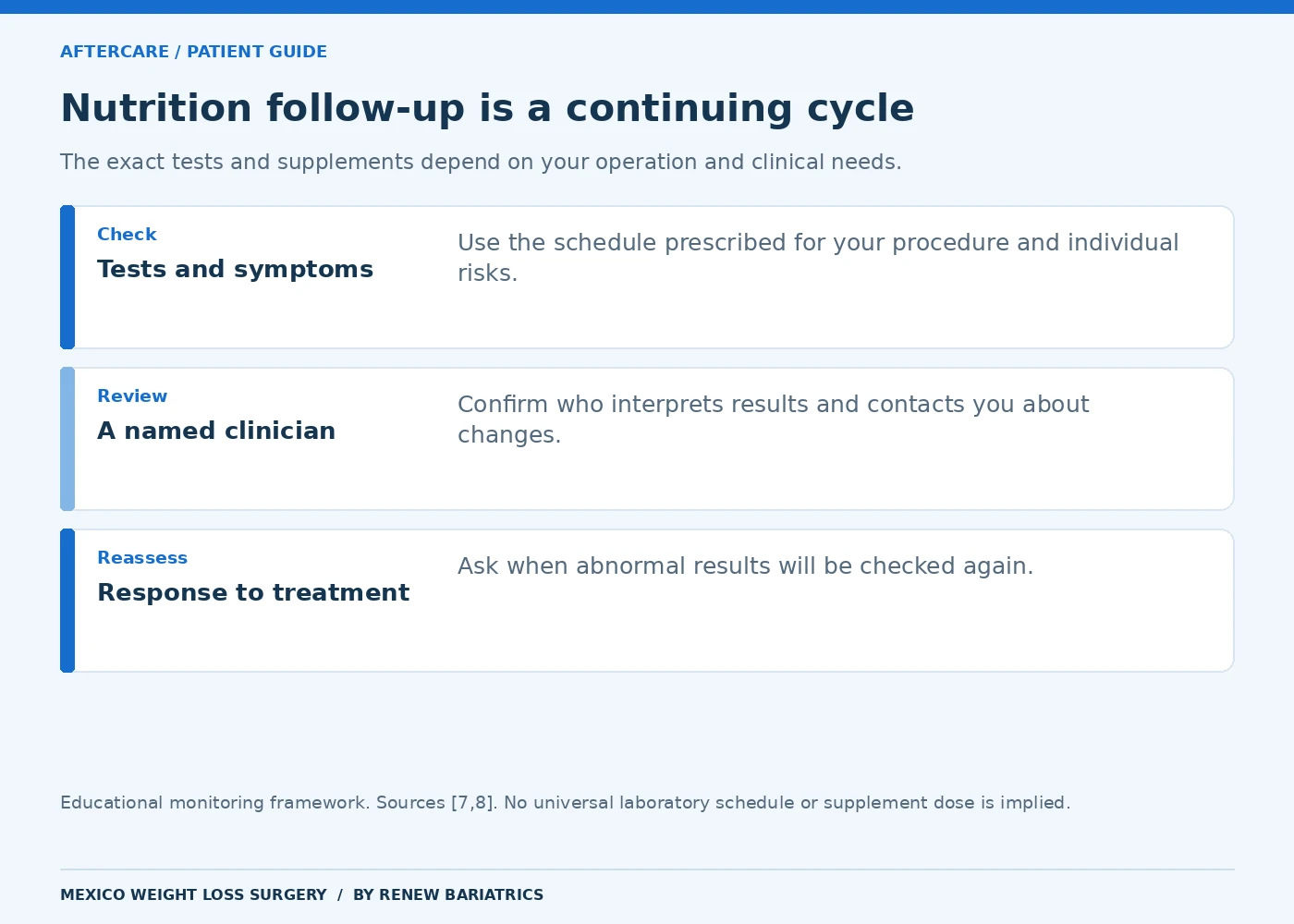
BOMSS's biochemical-monitoring guideline recommends lifelong nutritional monitoring, with the type and frequency tailored to the operation and individual circumstances. Early checks and long-term annual review serve different purposes; abnormal results or symptoms can require additional testing. A generic “annual panel” may not include the nutrients relevant to a particular procedure. [8]
Ask for a written list of tests and dates, along with the clinician responsible for interpretation. Confirm whether results automatically reach the bariatric team or whether you must send them. If a result is abnormal, ask when it will be repeated and how you will know that treatment corrected the problem. Do not assume that a laboratory portal's reference range answers every postoperative question.
Keep a simple record of test date, changes recommended and next check. This is especially valuable when care crosses borders or clinicians change. The objective is not collecting more tests for their own sake; it is ensuring that someone notices a problem, acts on it and verifies the response.
Your procedure determines the nutritional burden
A sleeve changes intake and stomach physiology even though it does not bypass the intestine. Roux-en-Y bypass changes both the pouch and the intestinal route. Procedures with a greater malabsorptive component can demand more intensive specialist nutritional care. BOMSS's primary-care guidance specifically identifies several malabsorptive procedures, including duodenal switch and SADI, as needing continuing specialist involvement rather than a routine primary-care-only pathway. [4]
Ask the surgeon to document any relevant limb lengths and revisions in the operative report. These details can matter to the clinician who later evaluates nutritional problems. If you have had more than one operation, use the current anatomy rather than the name of the first procedure when discussing follow-up.
A larger potential weight-loss effect is not a reason to minimize the lifelong demands of a procedure. Before agreeing to surgery, consider whether specialist reviews, supplements and laboratory testing are accessible where you live. After surgery, bring gaps in that access to the team's attention so the care plan can be made realistic.
Review medicines with a clinician or pharmacist
Weight loss and altered digestion can change medication needs. Blood glucose or blood pressure treatment may need adjustment, and some formulations may be unsuitable or less predictably absorbed after particular procedures. NHS Specialist Pharmacy Service guidance stresses reviewing the exact operation and monitoring both effectiveness and adverse effects; absence of published data about a medicine does not establish that surgery has no effect on it. [9]
Never crush, stop or substitute tablets without checking. Bring the discharge list to the clinician who manages each long-term condition. Ask who will monitor readings and symptoms, which changes you are authorized to make, and which require a call. Make sure prescribed injections, over-the-counter medicines and supplements are all included.
If several clinicians are involved, request one reconciled medication list. A medicine being absent from a hospital list is not always an intentional instruction to discontinue it. Clarify discrepancies promptly, particularly for treatments where missed or excessive doses can cause harm. This is a clinical coordination task, not something a travel coordinator should be expected to decide.
Pain medicines, ulcers and common late problems
BOMSS medication guidance cautions about medicines that irritate the stomach lining, including NSAIDs, and notes that absorption and formulation issues differ across procedures. Ask your team which pain-relief options are acceptable for you and whether stomach-protective medication is prescribed. Do not assume that an over-the-counter product is harmless because it is easy to purchase. [10]
NIDDK describes later complications including nutrient deficiencies, gallstones, strictures and hernias. Narrowing can cause trouble eating or swallowing; abdominal problems can arise well beyond the initial recovery. New symptoms years later should still be assessed with your surgical history in mind. [11]
At a medical appointment unrelated to weight, mention the operation and supplements. A dentist, emergency clinician or prescribing specialist may not otherwise know about the altered anatomy. Keep a brief surgical history on your phone or wallet card, but provide the full records when needed. Good aftercare includes making the relevant information available beyond the original bariatric clinic.
Dumping symptoms and low blood sugar
NIDDK distinguishes early dumping symptoms, which can occur within about 30 minutes of a meal, from later symptoms related to low blood glucose, often one to three hours afterward. Symptoms can include abdominal discomfort, sweating, light-headedness or weakness, but similar symptoms have other causes. Timing can help the assessment; it does not confirm a diagnosis by itself. [12]
Record what happened, when you ate, the interval before symptoms, and any glucose reading obtained under your clinician's plan. Recurrent episodes warrant assessment rather than simply avoiding more and more foods. If you are fainting, confused, severely unwell or unable to safely manage symptoms, seek urgent help.
Ask for an individualized response plan if low glucose is confirmed, including what to do during an episode and when to seek emergency care. Do not drive when you are experiencing symptoms that impair alertness. The long-term plan may involve a dietitian and medical treatment; it should preserve adequate nutrition rather than relying on increasingly restrictive self-imposed rules.
Rebuild strength as well as losing weight
Physical recovery and strength deserve attention independently of the scale. In a randomized trial of 76 women undergoing Roux-en-Y bypass, supervised resistance training with additional protein improved relative lower-limb strength compared with the other study groups, although it did not significantly prevent lean-mass loss. The trial supports structured rehabilitation, while showing that exercise is not a guarantee against every body-composition change. [13]
Ask when walking, lifting, resistance training and other activities are appropriate for your operation and healing. Clearance for one activity does not automatically cover another. Start with a plan that reflects pain, balance, joint limitations and baseline fitness, and seek help from a qualified professional when needed.
Choose functional measures you care about: climbing stairs, carrying groceries, getting up from a chair or walking comfortably. Discuss progress and setbacks at follow-up. A changing body can require adjustments in technique and workload. Treat movement as a way to rebuild capacity and confidence, rather than punishment for eating or a competition with another patient's recovery.
Emotional health, alcohol and reproductive planning
Changes in body image, relationships and eating routines can be difficult even when weight loss is welcome. Make space at follow-up to discuss mood, distress and coping. Support groups can offer connection, but they do not replace individualized treatment when symptoms are affecting daily life.
A prospective LABS cohort found a higher risk of new alcohol-use-disorder symptoms after Roux-en-Y bypass than after gastric banding. The outcome was based on screening symptoms, not a claim that every participant developed a clinical diagnosis. The study supports discussing alcohol use openly and obtaining help early when patterns change. [14]
If pregnancy is possible or planned, involve the bariatric and obstetric teams. International consensus recommendations address contraception, timing, nutrition and monitoring before and during pregnancy; many recommendations rely partly on expert consensus because high-quality evidence is limited. Ask for a plan based on weight stability, nutritional status and your circumstances, rather than relying on fertility assumptions or a single date from an internet checklist. [15]
Make long-term appointments useful
Bring more than a weight reading to a review. Discuss eating tolerance, hydration, medicines, supplements, activity, symptoms, mood and access to care. Ask whether returning conditions such as diabetes or sleep apnea need reassessment. Endotext describes postoperative care as a coordinated effort that includes chronic-disease management, nutrition, bone health and response to weight regain. [16]
If you have missed follow-up, restart it without waiting to “get back on track” first. Tell the clinician which tests, medicines or supplements have been missed and for how long. That allows an honest assessment. If you are uncomfortable with a previous interaction, explain what would make the next appointment more useful or seek another qualified clinician.
Leave with an agreed priority list and a next review date. An appointment is not complete simply because blood was drawn; results need interpretation and a response. Ask how you will be notified, when to follow up if you hear nothing, and who takes responsibility when care is shared between teams.
Questions to ask Renew before booking
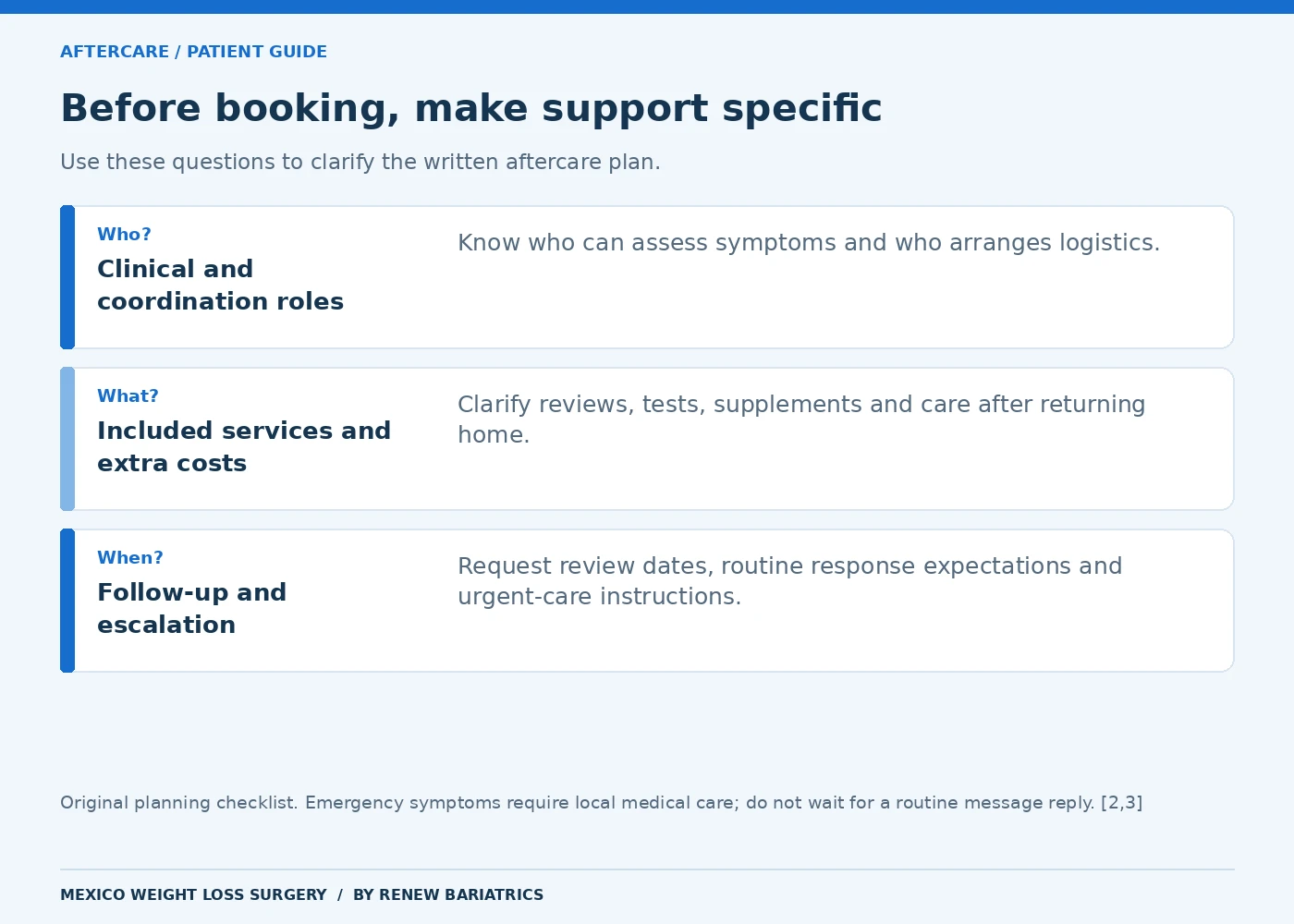
Ask which postoperative services are included for your exact procedure, how long they continue, and whether they are provided by a coordinator, dietitian or licensed clinician. Ask how urgent concerns are escalated and what response times you should expect for routine messages. Request the current written plan rather than assuming that a website example describes your package.
Clarify who organizes laboratory orders, reviews results, adjusts supplements and communicates with your local clinician. Ask what additional appointments, testing or treatment may cost, including care after returning home. If your plan involves a more complex revision or a malabsorptive procedure, ask how specialist follow-up will be maintained.
Finally, consider a practical rehearsal: if you developed a concern on a weekend at home, who would you contact, and where would you go for examination? If you could not tolerate a prescribed supplement, who would change it? Clear answers make support tangible. Clinical review and a written aftercare plan should guide the next step.
Leave with a follow-up plan you can use at home
This page focuses on continuing care after treatment. Before travel, identify who will manage nutrition, prescriptions, laboratory monitoring and questions after you return. Your treating clinician should set the timing and requirements for your particular procedure.
- Ask for your operative or procedure report and discharge instructions.
- Record the clinical contact for urgent concerns and the local emergency plan.
- Identify your home clinician and how records will be shared.
- Confirm which follow-up visits are included and how missed visits are handled.
- Discuss barriers to supplements, testing or appointments before booking.
For treatment-specific requirements, return to the relevant procedure guide. For the trip itself, use travel and recovery planning. Contact Renew’s team to confirm which follow-up services are included in your plan.
Compare related options: Gastric sleeve vs. Gastric bypass
These options change different structures. Your anatomy, symptoms, health history and follow-up needs guide the choice; neither is automatically better for everyone.
| What to compare | Gastric sleeve → | Gastric bypass → |
|---|---|---|
| Anatomy | A stomach-reducing operation. | A small pouch plus intestinal rerouting. |
| Reflux | Reflux can develop or worsen. | May be considered when reflux is an important concern. |
| Follow-up | Lifelong nutritional monitoring remains important. | Requires ongoing supplementation and nutritional monitoring. |
| Decision point | Discuss permanence and reflux risk. | Discuss bowel-related risks, ulcers and nutritional effects. |
Comparison references: Mayo Clinic: Sleeve gastrectomy ↗ · ASMBS: Roux-en-Y Gastric Bypass ↗
These options are not interchangeable for every person. The treating clinician must assess your anatomy, medical history and goals.
Further reading
Discuss your options with Renew.
Talk with a coordinator about aftercare, your goals and the information needed for clinical review. The treating team determines suitability and the care plan.
Call 844-736-3963 Complete health questionnaire ↗The questionnaire opens Renew’s existing intake. This review site does not collect health information.
References & evidence notes
Sources checked November 2026. Research findings are not a forecast for an individual or outcomes for Renew’s own program. Review study populations, methods and limitations alongside the reported results.
- American Society for Metabolic and Bariatric Surgery. Life after bariatric surgery ↗Patient education; lifelong follow-up, nutrition and individualized goals.
- CDC Yellow Book. Medical tourism ↗Records and local care planning before medical travel.
- NHS. Complications of weight loss surgery ↗Emergency symptoms and prompt evaluation. Use emergency services in your location.
- British Obesity and Metabolic Surgery Society. Post-bariatric surgery nutritional guidance for GPs ↗Persistent vomiting, thiamine risk and specialist follow-up for malabsorptive procedures.
- NHS. Recovering from weight loss surgery ↗Diet progression varies; follow-up and recovery information.
- UCSF Health. Dietary guidelines after bariatric surgery ↗Institution-specific guidance, not a replacement for a treating team’s protocol.
- ASMBS Nutrition Committee, 2016 update. Integrated health nutritional guidelines: micronutrients ↗Published 2017. doi:10.1016/j.soard.2016.12.018. Prevention, screening and replacement; evidence levels vary.
- BOMSS, 2020. Guidelines on biochemical monitoring and micronutrient replacement ↗Procedure-specific lifelong monitoring and replacement guidance.
- NHS Specialist Pharmacy Service, 2026. Advising on specific medicines following bariatric surgery ↗Individualized medicine review, altered handling and monitoring.
- BOMSS, 2023. Guidance on medications post-bariatric surgery for GPs ↗Medication formulation, gastric irritation and monitoring considerations.
- NIDDK. Weight-loss surgery side effects ↗Late complications, nutritional problems, strictures and hernias.
- NIDDK. Symptoms and causes of dumping syndrome ↗Early and late symptom timing; symptoms alone do not establish an individual diagnosis.
- Oppert et al., 2018. Resistance training and protein supplementation increase strength after bariatric surgery ↗Obesity. doi:10.1002/oby.22317. Randomized trial of 76 women; strength benefit without significant between-group preservation of lean mass.
- LABS-2 investigators, 2017. Alcohol and other substance use after bariatric surgery ↗Prospective observational cohort; alcohol-use-disorder screening symptoms, not universal individual diagnoses.
- International consensus group, 2019. Pregnancy after bariatric surgery: periconception, antenatal and postnatal care ↗Evidence-informed consensus; several recommendations lack high-quality trial evidence.
- Endotext, updated 2025. Medical management of the postoperative bariatric surgery patient ↗Integrated chronic-disease, nutritional, bone-health and weight-management care.