

Jump to a section
Anatomy illustrationSynthetic illustrationCompare proceduresRelated ProceduresWhat a facelift can changeSkin, fat and deeper support are differentWho may be a candidate?The consultation should leave you with a written planRisks deserve more than a consent signatureWhat research can—and cannot—tell youPreparation, medicines and anesthesiaWhat recovery usually involvesScars, appearance and long-term expectationsFacelift, neck lift or eyelid surgery?Planning a facelift trip to MexicoFacelift Cost in MexicoFacelift cost questionsQuestions to resolve before decidingYour next stepReferencesA facelift is surgery to reposition sagging facial tissues and improve selected changes around the cheeks, jawline and sometimes the neck. The medical name is rhytidectomy. It may improve jowls and loss of facial definition, but it does not stop aging or automatically treat every wrinkle, eyelid concern or skin discoloration. A useful consultation starts by identifying the change you want and the anatomical reason for it. [1]
If you are researching facelift surgery and facelift cost in Mexico, compare the proposed operation, surgeon, anesthesia arrangements and recovery support together. The procedure name alone cannot tell you how extensive surgery will be or what is included in a quote. This guide explains the main decisions and gives you questions to take to Renew Bariatrics. A consultation is an assessment, not a commitment to surgery. Your actual procedure, facility and itinerary need written confirmation.
Understand the anatomy
A simplified, labeled view of the structures and treatment area. Select the image to view it at full size.
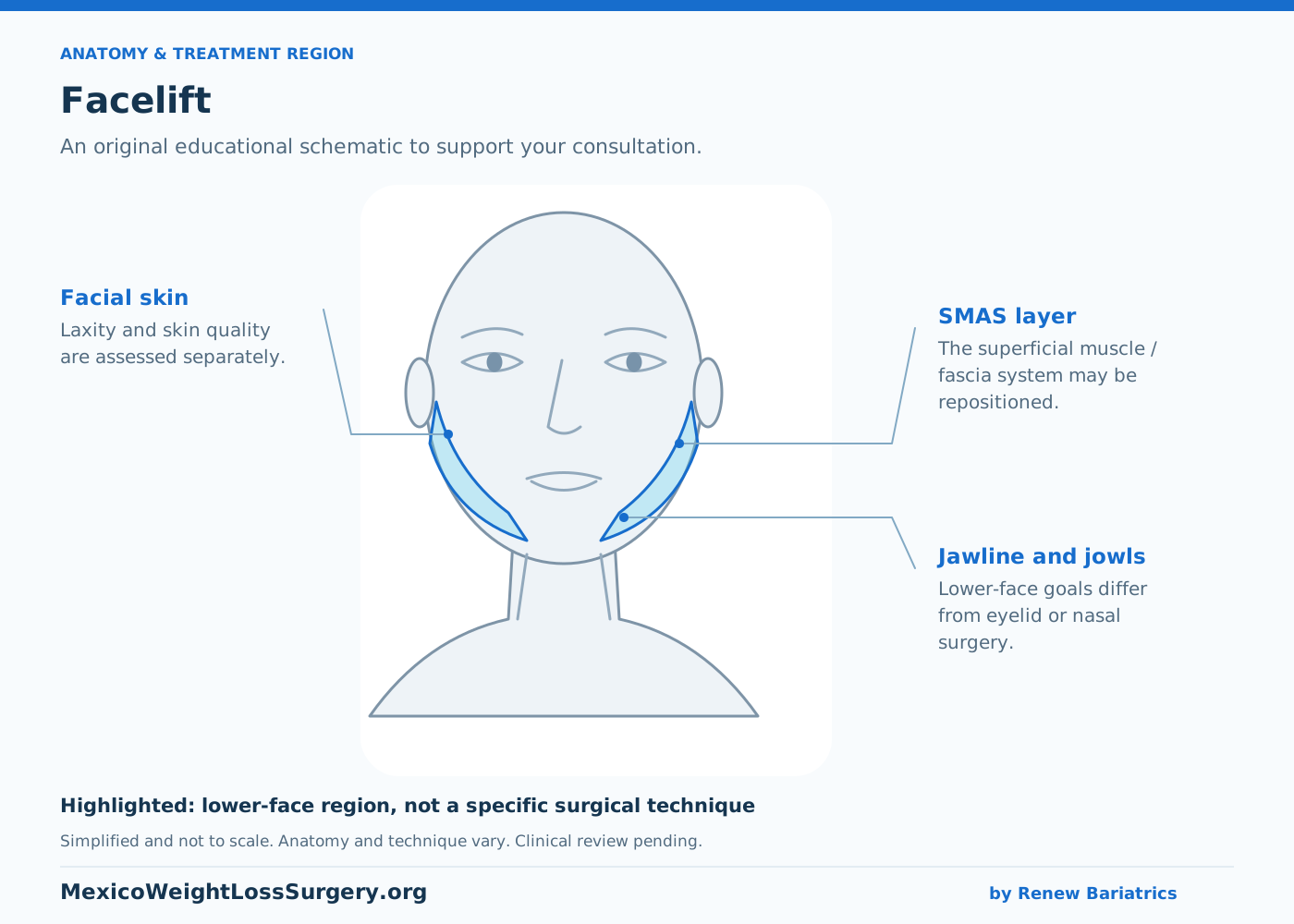
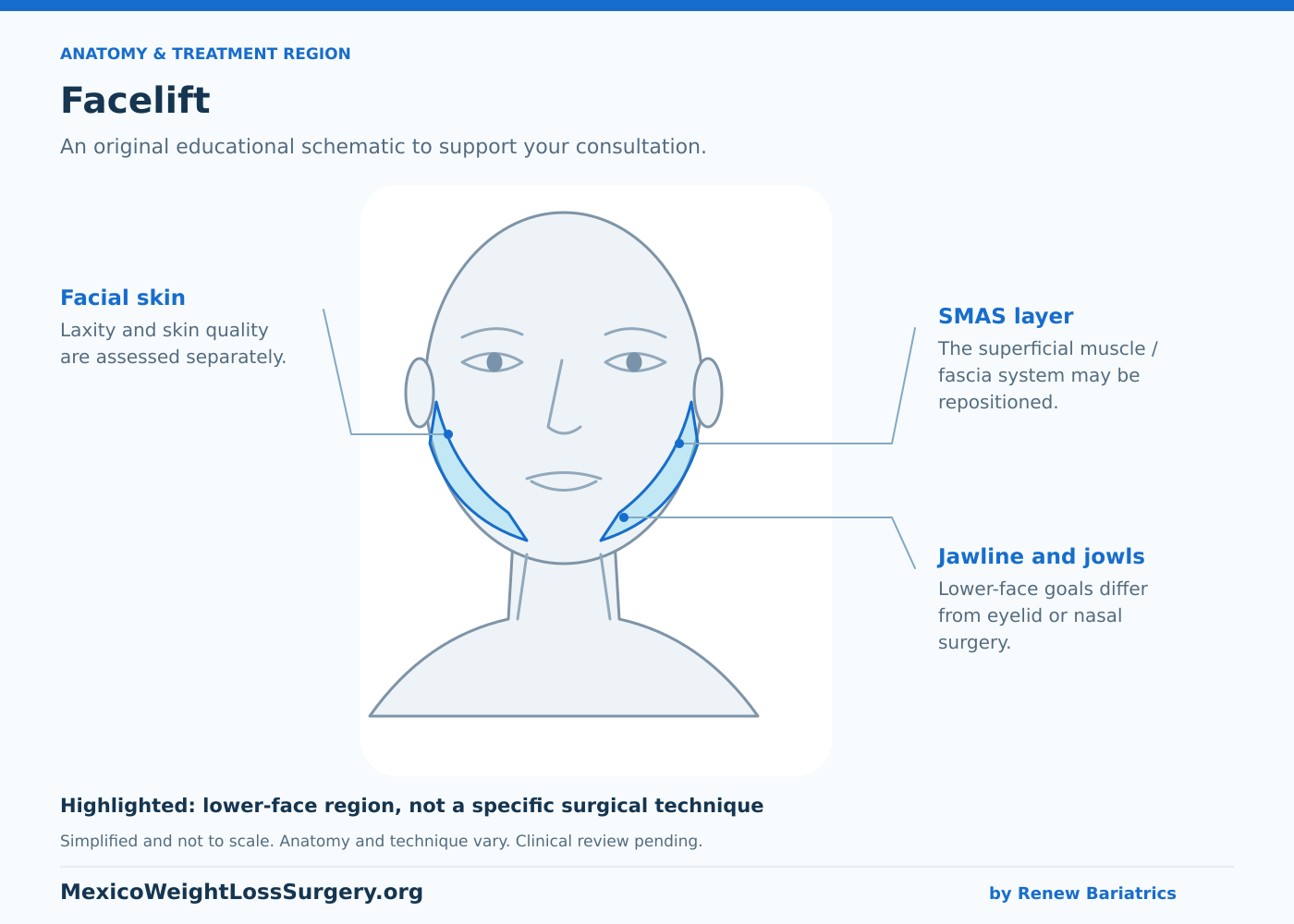
Anatomy references: ASPS — Facelift ↗ · ASPS — Neck lift ↗ · ASPS — Procedure details and safety ↗
What a facelift can change
Facial aging can involve skin laxity, movement or loss of fat, and changes in the supporting tissues. A facelift primarily addresses sagging and contour. Skin resurfacing, injectables, fat transfer, brow surgery and eyelid surgery address different concerns and may be discussed separately. A person whose main concern is pigmentation or very fine surface lines may need a different approach. [1]
Try describing your concern in ordinary language: “I notice loose tissue along my jaw,” or “My lower face looks different after weight loss.” Then ask the surgeon to explain which part is likely to improve, which part will remain and where scars will sit. This is more informative than asking to look a particular number of years younger. It also makes it easier to recognize when an additional procedure has been proposed without addressing one of your priorities.
Skin, fat and deeper support are different
In a conventional facelift, the surgeon can reposition underlying tissue, adjust fat and redrape skin before removing excess skin. The incision often travels from the temple hairline around the ear toward the lower scalp. A shorter incision or an additional cut under the chin may be used in selected plans. Intravenous sedation or general anesthesia may be appropriate depending on the operation and patient. [2]
“Mini,” “SMAS” and “deep plane” describe aspects of technique or extent, but a label is not a personal recommendation. Ask what will actually be moved, whether neck work is included, and why the chosen approach fits your face. Request a drawing on your own clinical photographs if that would help. A clear explanation should make sense without requiring you to become a facial anatomist.
The skin is not the only structure involved, and a stronger pull is not a meaningful treatment goal. Ask how the surgeon plans to preserve your expression, hairline and ear contour. Discuss any previous facelift, threads, filler, fat transfer or facial injury before choosing a technique. Keep those details in your consultation record even when treatment occurred many years ago. [8]
Who may be a candidate?
ASPS describes suitable candidates as people in good health, without conditions that interfere with healing, who do not smoke and have realistic expectations. The decision should reflect your own wishes. Age alone is not a complete assessment, and looking at someone else's photographs cannot establish that you are eligible. [3]
Health history matters. Mayo Clinic highlights smoking, poorly controlled diabetes or hypertension, blood-thinning medicines and repeated weight changes among considerations that can affect risk or satisfaction. Disclose nicotine use, including products you may not think of as smoking, and let the clinical team determine what changes or testing are necessary. Do not change prescribed medicines on your own to qualify. [7]
For someone who has undergone bariatric surgery, explain the procedure, weight trajectory, current supplements and any ongoing nutritional or medical follow-up. Bring recent information from the clinicians who manage your care. Ask whether the timing is appropriate for you, rather than assuming a facelift should follow a particular number of months after weight loss. This page does not set a universal weight, laboratory or timing requirement.
The consultation should leave you with a written plan
A facelift consultation normally includes a discussion of medical conditions, allergies, medicines, prior operations and goals, together with examination and photographs. The surgeon should explain alternatives, likely outcomes, anesthesia and complications. It is reasonable to bring a trusted person to help you remember the discussion, while making sure the decision remains yours. [8]
Create a one-page note before the appointment. Put your two or three main concerns at the top. Underneath, write what you would consider a worthwhile improvement and what tradeoffs you are reluctant to accept. For example, you may prioritize a softer jawline change over a more extensive operation, or want to understand whether a visible scar would be acceptable with your usual hairstyle. Those are preferences to discuss, not instructions for the surgeon to ignore safety.
Ask for clarification whenever the language becomes vague. “Natural” might mean a modest change to one person and a comprehensive change to another. “Full facelift” may also be used differently by different practices. Have the planned areas, associated procedures and exclusions recorded in plain language so that the quote, consent discussion and your expectations refer to the same operation.
Risks deserve more than a consent signature
Possible complications include bleeding, infection, fluid collection, delayed healing or skin loss, altered sensation, persistent pain, facial nerve weakness, unfavorable scars and hair loss near incisions. Asymmetry or dissatisfaction can lead to further treatment. Anesthesia and blood-clot complications are also possible. Some effects resolve, while others can persist. [4]
A hematoma is a collection of blood that can put pressure on tissues. Mayo Clinic identifies it as an important early complication and advises prompt contact for severe one-sided facial or neck pain. Chest pain or difficulty breathing requires emergency evaluation. Ask your team for its own written symptom instructions and direct emergency pathway; do not wait for a routine online reply when symptoms are serious. [7]
Discuss your personal risk with the surgeon instead of treating a list as either reassurance or a prediction. Ask which risks are increased by your history, which can be reduced before surgery and which remain despite good care. Find out who examines an unexpected problem in person, where urgent surgery would take place if needed, and how care would be coordinated after you return home.
What research can—and cannot—tell you
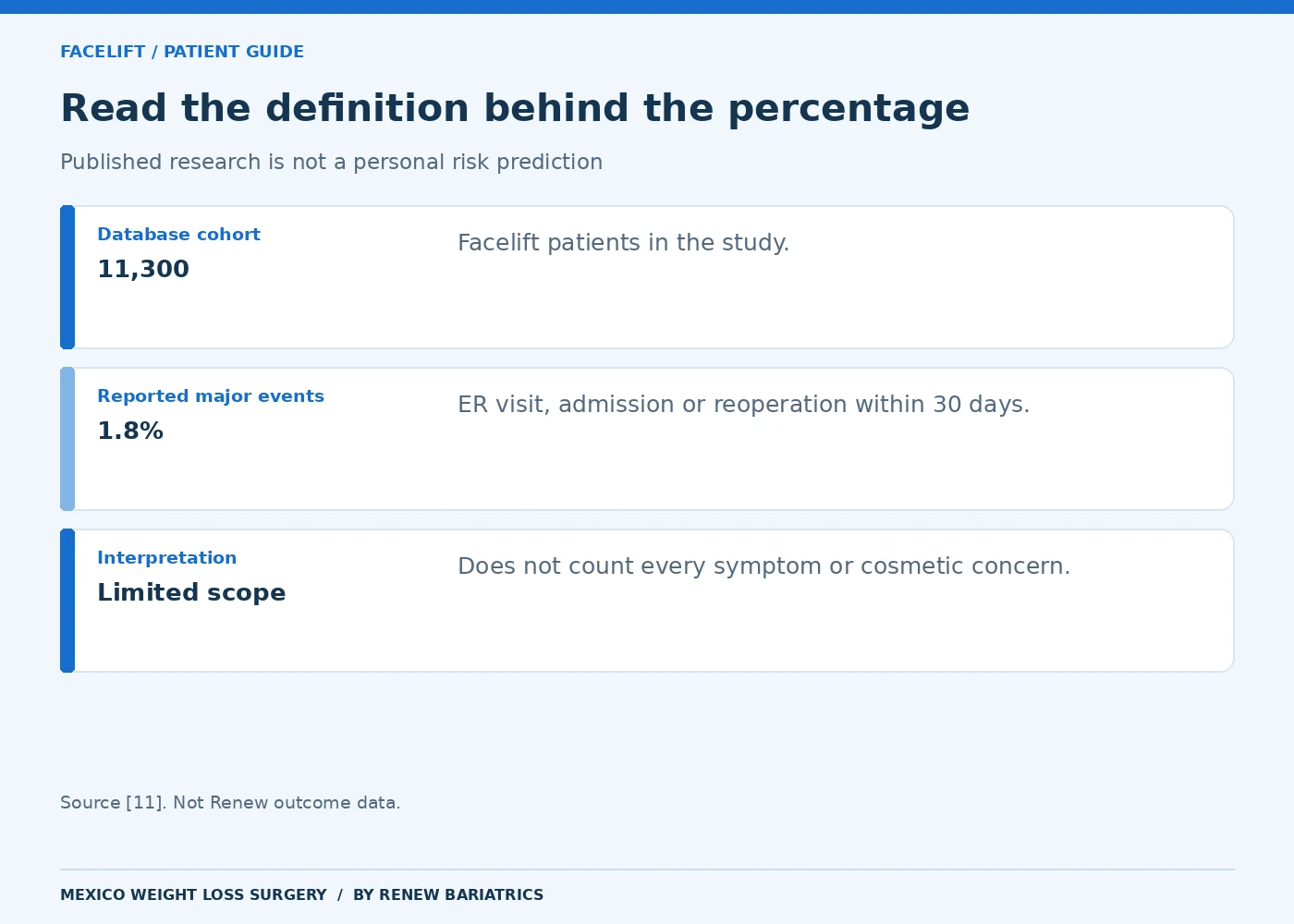
A prospective insurance-database study included 11,300 facelift patients treated between 2008 and 2013. Major complications occurred in 1.8%; the definition required an emergency visit, admission or reoperation within 30 days. Hematoma and infection were the most common major events. Combined procedures had higher reported complication rates than facelift alone. [11]
This number is not the rate of every symptom, scar concern or unsatisfactory result. It comes from a particular population and reporting system, not Renew's own outcomes. It also cannot predict your individual risk or prove that one named technique is best. Ask the surgeon how they track their own complications, the follow-up period used and whether minor problems and revisions are included.
A separate systematic review of deep-plane facelift reports pooled 8,841 patients across 31 studies. It estimated an overall hematoma rate of 2.7% and a major hematoma rate of 0.97%, with no clearly superior preventive adjunct among those compared. Differences in definitions and included studies mean these figures should not be directly ranked against the database study. [12]
Use evidence to improve the questions you ask. A claim of “zero complications” needs a denominator, a timeframe and a definition. Ask how many comparable patients were followed and whether anyone was lost to follow-up. The useful outcome is a transparent discussion about the benefits and limits of the proposed treatment, not a contest between isolated percentages.
Preparation, medicines and anesthesia
Preparation may involve a medical assessment, testing, smoking cessation and a clinician-directed review of medicines and supplements. Arrange an adult to take you from surgery and stay with you during the initial recovery period. Your team should provide specific instructions for the evening before surgery and the day itself. [5]
Tell the anesthesia team about GLP-1 medicines used for diabetes or weight management. Planning depends on symptoms, treatment phase and individual risk; do not apply a blanket stop-or-continue rule from an online article. The prescriber, surgeon and anesthesia clinician should coordinate instructions. [14]
Make a medication list that includes doses, frequency and the reason each medicine is taken. Add nonprescription products and supplements. Ask for instructions in writing, especially if different clinicians have given different advice. If something is unclear, resolve it before travel rather than guessing at the hotel. Your list should also state allergies and previous anesthesia problems, including severe nausea, so the team can discuss the plan with you.
What recovery usually involves
Dressings and sometimes drains are used after a facelift. The treating team should explain wound care, prescribed medicines, follow-up visits and when to restart ordinary activities. Ask specifically about washing your hair, makeup, driving, exercise and sleeping arrangements. A generic recovery calendar cannot substitute for the instructions attached to your particular operation. [6]
ASPS notes that many people feel socially presentable around 10–14 days, while tightness and changes in sensation or texture can take two to three months to settle. That is a broad description, not medical clearance to fly, return to a demanding job or attend an important event. Healing continues beyond the point when bruising is easy to conceal. [9]
Plan around the tasks your life actually requires. A desk job, video calls, caring for children, lifting luggage and commuting are different demands. Tell the team which apply to you. Consider who will handle shopping, household tasks and transportation if recovery takes longer than hoped. A flexible plan is usually easier to manage than a calendar with no room for changes.
Keep follow-up appointments even if you feel well. Bring a short symptom record and a list of questions, rather than relying on memory. If the team requests photographs, use the method they specify; photographs can help communication but cannot replace an examination when one is needed. Ask how they decide whether a concern requires a local clinician, an urgent visit or a planned review.
Scars, appearance and long-term expectations
Incisions leave permanent scars, even when placed to make them less noticeable. Hairline and ear contours help conceal many facelift incisions, but healing varies and some scars require additional attention. Ask to see the proposed placement with your usual hairstyle and discuss any history of raised or problematic scars. [7]
The final result develops as swelling resolves. Continued aging means a facelift is not a permanent pause in appearance. Sun protection and healthy habits remain relevant, and further treatment is sometimes considered. ASPS explicitly notes that a particular result cannot be guaranteed. [9]
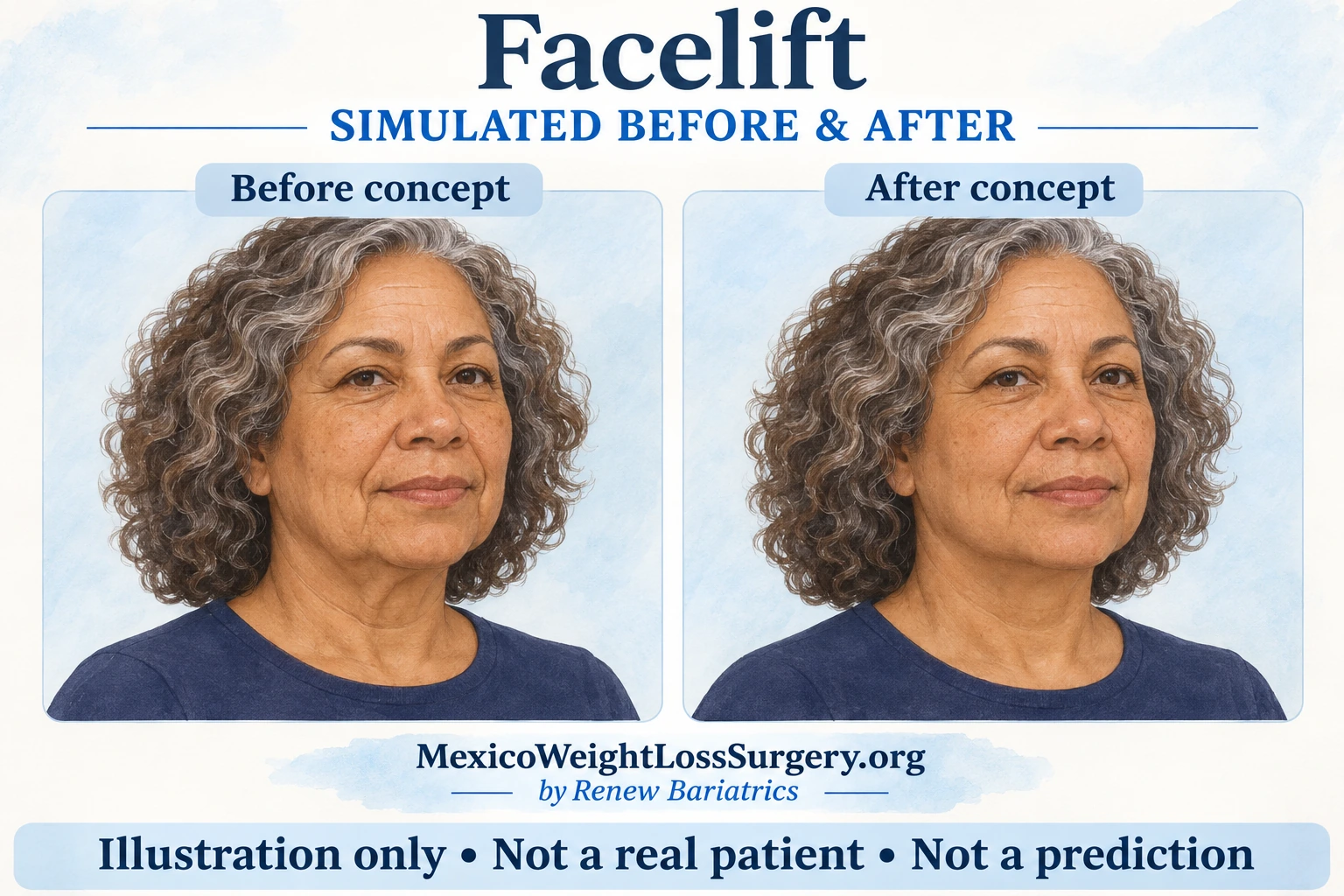
When reviewing clinical photographs, ask whether the lighting, pose, expression and follow-up interval are comparable. Identify which procedures the person had in addition to the facelift. A combined treatment image cannot show the effect of facelift alone. The illustration on this page is a fictional editorial scene, not a patient photograph or a forecast of your appearance.
Facelift, neck lift or eyelid surgery?
A neck lift concentrates on the neck and jawline. Eyelid surgery concerns upper or lower eyelid tissues. These operations may be discussed alongside a facelift, but they are not interchangeable and each requires its own assessment. Read the neck lift guide and blepharoplasty guide if those areas are among your priorities. [1],[2]
Do not assume combining procedures is automatically more sensible because you are already traveling. Ask about additional operating time, recovery needs, costs and the possibility of staging treatment. The large facelift database study found more major complications in some combined-procedure groups; it does not establish that every combination is inappropriate. Your clinicians need to assess the particular combination in your case. [11]
Choosing no surgery is also an option. You may decide the expected change is too small for the recovery, scars or expense involved. You may prefer to wait, seek another opinion or discuss treatments that address a different concern. A helpful consultation makes those choices understandable without turning your hesitation into a problem to overcome.
Planning a facelift trip to Mexico
CDC advises medical travelers to plan continuity of care, check qualifications and facility standards, clarify insurance and obtain records. Surgery and travel can add risk, and recovery should not be treated as a vacation itinerary. Get individual clearance for your return journey. [15]
Before booking, request the surgeon's full name and verifiable professional credentials, the operating facility, anesthesia arrangements and the process for emergency transfer. Ask who is responsible for your care outside office hours. Distinguish a coordinator who helps organize your trip from the clinician who makes medical decisions. These roles may work closely together, but they answer different kinds of questions. [13]
Create a travel document with the addresses and telephone numbers you will need, your planned appointments and a contact at home. Ask what happens if your flight changes, if the surgeon requests another in-person review, or if you need additional accommodation. Know who can authorize changes to your clinical schedule. A transport reservation should follow the medical plan rather than determine it.
A synthetic illustration of possible changes
This fictional example illustrates a treatment concept. It cannot show the result you would achieve, predict scar healing, or establish a typical outcome.
Facelift Cost in Mexico
No single price applies to every facelift. ASPS separates surgeon fees from anesthesia, facility charges, tests, medicines and related expenses. U.S. averages are not a quote for Mexico, and a low headline price does not identify which services are included. [10]
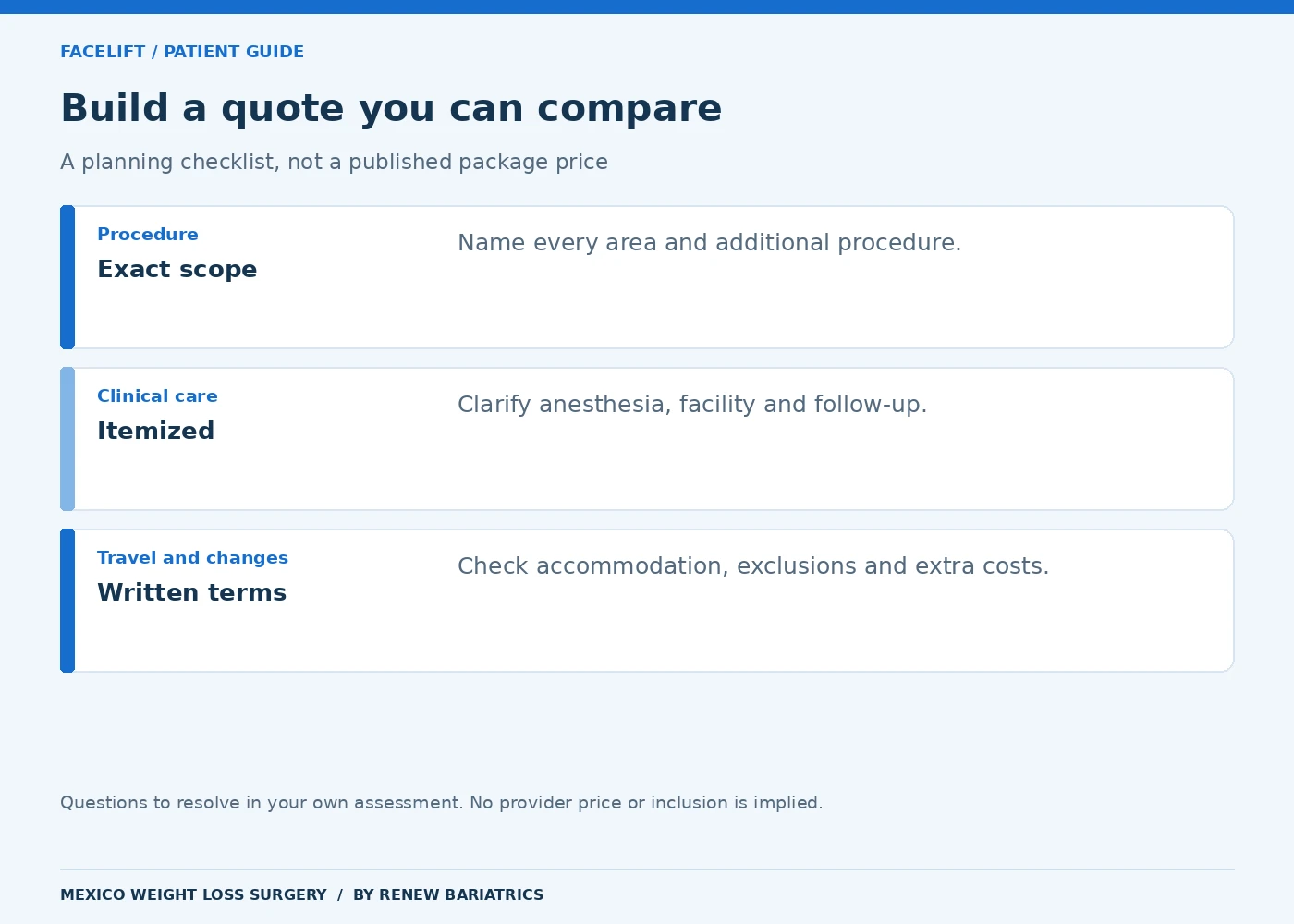
Request a written, itemized Renew quote after assessment. It should identify the planned procedure and any separate neck, eyelid, resurfacing or fat-transfer work. Ask about consultation and testing, anesthesia, facility use, overnight care if applicable, medicines, dressings, follow-up and the duration of any included support. Record hotel and transport arrangements separately so medical and travel charges are easy to understand.
Ask how unexpected costs are handled. That includes additional nights, repeat assessments, treatment of complications and revision discussions. Clarify deposit, cancellation and rescheduling terms before payment. Financing is a separate financial decision: compare total repayment and fees, not only the monthly amount. None of these questions implies that a problem will occur; they make the agreement reviewable while you still have choices.
Facelift cost questions
Does the facelift quote include a neck lift?
Ask explicitly. The operation names do not establish the scope of a package. Have each treated area and any additional procedure recorded in the quote and consent discussion.
Is a lower advertised price a comparable offer?
Only when the proposed procedures and included services match. Compare anesthesia, facility, assessments and follow-up along with the surgical fee. Ask how additional care and rescheduling are handled before paying a deposit.
Questions to resolve before deciding
Use your consultation notes to check that you can answer the following: What concerns does this operation address? What will it leave unchanged? Where are the scars? Why is this technique recommended? Who gives anesthesia? What is the recovery support? What happens if I need urgent care or dislike the result? ASPS recommends discussing qualifications, facility standards, risks, recovery and revision options directly with the surgeon. [13]
Add a personal question that matters to you. You might ask how a visible scar would affect wearing your hair up, whether your work schedule allows enough flexibility, or how your companion should help during the first days. Ask the team to explain anything you cannot comfortably repeat in your own words. Understanding the plan is more valuable than leaving with a long list of unfamiliar procedure names.
For the next step, send Renew a concise account of your goals and request a clinical assessment with an individualized quote. Review the cost guide, about Renew and patient review sources alongside the proposed plan. Reviews can describe an experience; the surgeon's assessment and informed consent determine whether this surgery fits you.
Program information related to this guide
Explore Renew Bariatrics’ procedure options when discussing a plastic surgery plan. Availability, combinations and suitability require individual confirmation.
Facelift vs. neck lift
These procedures address different concerns and may be combined or staged. A clinical assessment determines which, if either, fits your anatomy and goals.
| What to compare | Facelift → | Neck Lift → |
|---|---|---|
| Main goal | Addresses lower-face sagging and jowls. | Focuses on the neck and jawline. |
| What changes | Facial skin and deeper support tissues. | Neck skin, fat and possible platysma work. |
| Key distinction | Does not replace nose or eyelid surgery. | Does not address every facial-aging concern. |
| Recovery consideration | Bruising, swelling and incision care are expected considerations. | Neck swelling and movement instructions require planning. |
| Cost comparison | Request an itemized quote for this exact procedure and care plan. | Compare the same inclusions, exclusions and recovery expenses. |
Comparison references: ASPS — Facelift ↗ · ASPS — Neck lift ↗ · ASPS — Procedure details and safety ↗
These options are not interchangeable for every person. The treating clinician must assess your anatomy, medical history and goals.
Discuss your options with Renew.
Talk with a coordinator about facelift, your goals and the information needed for clinical review. The treating team determines suitability and the care plan.
Call 844-736-3963 Ask about plastic surgery ↗The link opens Renew’s plastic surgery health questionnaire. This review site does not collect health information.
References & evidence notes
Sources checked November 2026. Research findings are not a forecast for an individual or outcomes for Renew’s own program. Review study populations, methods and limitations alongside the reported results.
- American Society of Plastic Surgeons. Facelift ↗Professional society patient education; not provider-specific outcome data.
- American Society of Plastic Surgeons. Facelift Procedure Steps ↗Professional society patient education; not provider-specific outcome data.
- American Society of Plastic Surgeons. Facelift Candidates ↗Professional society patient education; not provider-specific outcome data.
- American Society of Plastic Surgeons. Facelift Risks and Safety ↗Professional society patient education; not provider-specific outcome data.
- American Society of Plastic Surgeons. Facelift Preparation ↗Professional society patient education; not provider-specific outcome data.
- American Society of Plastic Surgeons. Facelift Recovery ↗Professional society patient education; not provider-specific outcome data.
- Mayo Clinic. Facelift ↗Institutional patient education.
- American Society of Plastic Surgeons. Facelift Consultation ↗Professional society patient education; not provider-specific outcome data.
- American Society of Plastic Surgeons. Facelift Results ↗Professional society patient education; not provider-specific outcome data.
- American Society of Plastic Surgeons. Facelift Cost ↗Professional society patient education; not provider-specific outcome data.
- Prospective multicenter cohort. Preoperative Risk Factors and Complication Rates in Facelift: Analysis of 11,300 Patients ↗30-day major complications in a specific insurance database; not all adverse effects.
- Systematic review and meta-analysis. Prevention of Hematoma in Patients Undergoing Facelift (Rhytidectomy) ↗Deep-plane study synthesis; heterogeneous reports and definitions.
- American Society of Plastic Surgeons. Facelift Questions ↗Professional society patient education; not provider-specific outcome data.
- American Society of Anesthesiologists. Drugs for Diabetes or Weight Loss: What To Know Before Surgery ↗Individualized peri-anesthesia planning.
- CDC Yellow Book. Medical Tourism ↗Travel, records and continuity of care.